

What Is AI SEO Automation?
AI SEO automation explains how teams use structured workflows and AI assistance to plan, draft, optimize, publish, measure, and refresh useful search content.
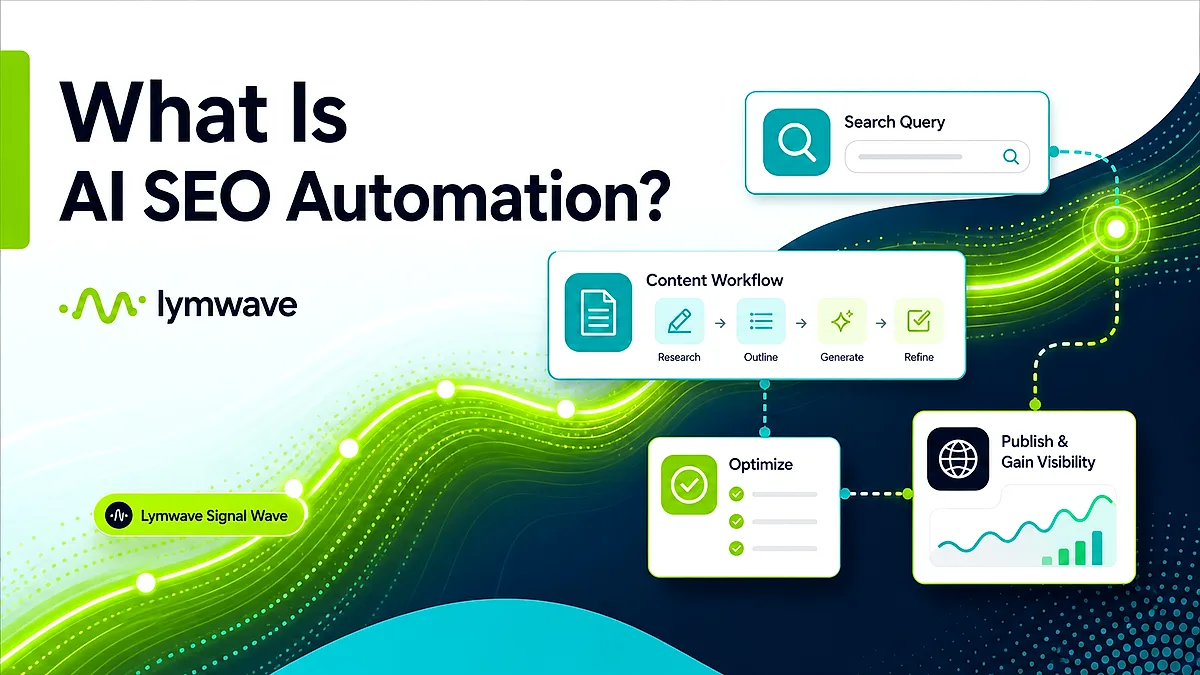
This guide sits in the AI SEO Automation topic cluster as a faq resource.
Why this definition matters
AI SEO automation is the use of structured workflows and AI assistance to plan, draft, optimize, publish, measure, and refresh search-focused content. The important word is not only "AI." The important word is "workflow."
Quick answer: AI SEO automation helps teams turn repeatable content tasks into a governed system. It can support research, briefs, outlines, drafting, metadata, internal links, schema, publishing preparation, and reporting. It should not replace editorial judgment, claim review, or strategy.
This distinction matters because many teams think automation means pressing a button and publishing whatever comes out. That is risky. Search visibility depends on useful answers, clear topic coverage, accurate claims, helpful internal links, and consistent updates. Automation can make those steps faster, but it still needs standards.
For SaaS founders, small business owners, and content marketers, the real benefit is operational. Instead of starting every article from scratch, the team can use a repeatable process: choose the right topic, understand the intent, generate a brief, draft with context, review the claims, optimize the page, publish through the right destination, then decide when the content needs improvement.
The result is not "more content at any cost." The result should be a calmer publishing system that helps produce useful SEO, AEO, and GEO content without losing human control.
What AI SEO automation means
AI SEO automation means applying AI to the parts of search content work that are repeated often and can be guided by rules. It is different from simply asking a writing tool to create an article. A writing tool creates text. A content workflow coordinates the steps around that text.
In practice, it can support:
- topic and keyword grouping
- search intent classification
- article briefs and outlines
- draft generation from approved inputs
- metadata suggestions
- internal link suggestions
- FAQ and answer-ready sections
- schema recommendations
- publishing preparation
- refresh recommendations
- reporting summaries
The best systems do not treat every step as fully automatic. They separate tasks that can be assisted from decisions that need judgment. AI can suggest a title, but a human should decide whether the title fits the audience and promise. AI can draft an explanation, but a reviewer should check whether the explanation is accurate and specific. AI can recommend internal links, but the team should confirm that those links help the reader.
That is why a good workflow includes review gates. Automation helps move work forward, while humans approve strategy, positioning, factual claims, examples, and final publication.
For a broader operating model, see the AI SEO automation guide. It explains how the content engine fits together beyond a single article.
How the workflow works
A practical workflow usually starts before drafting. The first step is deciding what should be created and why. A topic should connect to a real audience question, a business goal, and an existing content cluster.
The next step is planning. The system can group related keywords, identify the primary intent, list questions to answer, suggest entities to cover, and choose related internal links. This planning stage keeps the article from becoming a generic draft.
After planning, the workflow moves into briefing. A brief should define the reader, the problem, the angle, the target answer, the required sections, the internal links, and any claims that need proof. The brief is where automation becomes useful because it turns scattered inputs into a repeatable structure.
Drafting comes after the brief. AI can create a first draft, but the draft should be treated as working material. It still needs review for accuracy, usefulness, clarity, and tone. The reviewer should remove vague filler, unsupported claims, repeated keywords, and sections that do not answer the search intent.
Optimization follows the draft. This includes metadata, headings, answer summaries, FAQs, schema, image alt text, and internal links. The goal is not to stuff keywords into every section. The goal is to make the page easy for people, search engines, and answer engines to understand.
Publishing is another workflow step. The page should move into WordPress, Webflow, GitHub, a hosted blog, or another destination with the right canonical URL, metadata, image, and related links. If the team publishes in multiple places, automation can reduce formatting mistakes.
Finally, the workflow continues after publication. Search content needs measurement and refresh decisions. A useful system watches performance signals, content age, topic changes, and missing answer coverage so older pages do not quietly decay.
If planning is the current bottleneck, start with how to create a 30-day SEO content plan with AI. A calendar makes automation easier because each article has a clear place in the broader content system.
How this supports SEO, AEO, and GEO
Traditional SEO focuses on helping pages rank and earn clicks from search engines. Automation can support SEO by improving consistency around search intent, metadata, internal links, topic coverage, and refreshes. It can also reduce the manual work of turning a content plan into publish-ready pages.
AEO, or answer engine optimization, focuses on making content easy to answer from. That means direct definitions, concise summaries, clear section structure, and FAQ-style answers where they genuinely help. Automated workflows can remind teams to include these answer-ready elements without turning every page into a thin FAQ.
GEO, or generative engine optimization, is about making brand, product, category, and entity context easier for AI systems to understand and summarize. This depends on consistent naming, clear explanations, strong topical coverage, and factual content. Automation can help maintain those patterns across a library.
These three layers work together. A page that answers a question clearly, connects to related topics, includes useful internal links, and avoids unsupported claims is better positioned for human readers and machine interpretation.
The practical point is simple: automation should improve structure and consistency. It should not create fake authority. It should not invent customer proof, rankings, traffic numbers, citations, or guarantees. Trust is part of search visibility.
For deeper optimization steps, read how to optimize blog posts for SEO, AEO, and GEO.
Common mistakes to avoid
The first mistake is treating automation as a replacement for strategy. If the topic is weak, the draft will still be weak. A faster workflow does not fix a poor content plan.
The second mistake is publishing drafts without review. AI can produce confident language even when the answer is vague or unsupported. Every public page needs claim checks, especially when it mentions product capabilities, pricing, legal rules, medical guidance, financial topics, or third-party comparisons.
The third mistake is overusing exact-match keywords. Search content should be clear and natural. Repeating the same phrase in every heading makes a page less useful and less credible.
The fourth mistake is skipping internal links. Content libraries need paths. A definition article should connect to deeper guides, planning workflows, and optimization tutorials so readers can keep moving.
The fifth mistake is stopping at publication. Search conditions change, products change, and reader questions change. A good system includes refresh triggers and reporting, not just generation.
The final mistake is measuring only output volume. Publishing more pages is not the same as building a stronger organic channel. Better measures include approved articles, published pages, useful internal links, refreshed pages, improved coverage, and fewer workflow bottlenecks.
Frequently asked questions
What is AI SEO automation?
AI SEO automation is the use of structured workflows and AI assistance to plan, draft, optimize, publish, measure, and refresh search-focused content. It helps teams repeat the right steps while keeping humans responsible for strategy, claims, and final approval.
Is AI SEO automation the same as automated article writing?
No. Automated article writing is only one possible task. A complete workflow also covers topic planning, briefs, metadata, internal links, schema, publishing preparation, performance review, and content refreshes.
How does AI SEO automation support AEO and GEO?
It helps teams include answer-ready summaries, clear definitions, FAQ sections, entity coverage, consistent product language, and structured internal links. Those elements make content easier for people, search engines, and AI answer systems to interpret.
Should teams publish AI-generated content automatically?
Teams should be careful. Publishing can be automated after approval, but the content itself should pass review for usefulness, accuracy, brand fit, internal links, metadata, and unsupported claims.
What is the safest way to start?
Start with planning and workflow support before full publishing automation. Build a 30-day content plan, define review gates, generate one article at a time, validate metadata and links, then expand automation as the process proves reliable.
Useful next reads
AI SEO Automation Guide: How to Build a Content Engine That Publishes Consistently explains practical SEO, AEO, and GEO workflows for planning, publishing, measuring, and improving useful content consistently.
How to Create a 30-Day SEO Content Plan with AI explains practical SEO, AEO, and GEO workflows for planning, publishing, measuring, and improving useful content consistently.
How to Optimize Blog Posts for SEO, AEO, and GEO explains practical SEO, AEO, and GEO workflows for planning, publishing, measuring, and improving useful content consistently.
Turn this into a working content system
Audit your content, find AI visibility gaps, and build a publishing workflow that compounds.