

The Beginner's Guide to SEO content automation
The Beginner's Guide to SEO content automation explains practical SEO, AEO, and GEO workflows for planning, publishing, measuring, and improving useful content consistently.
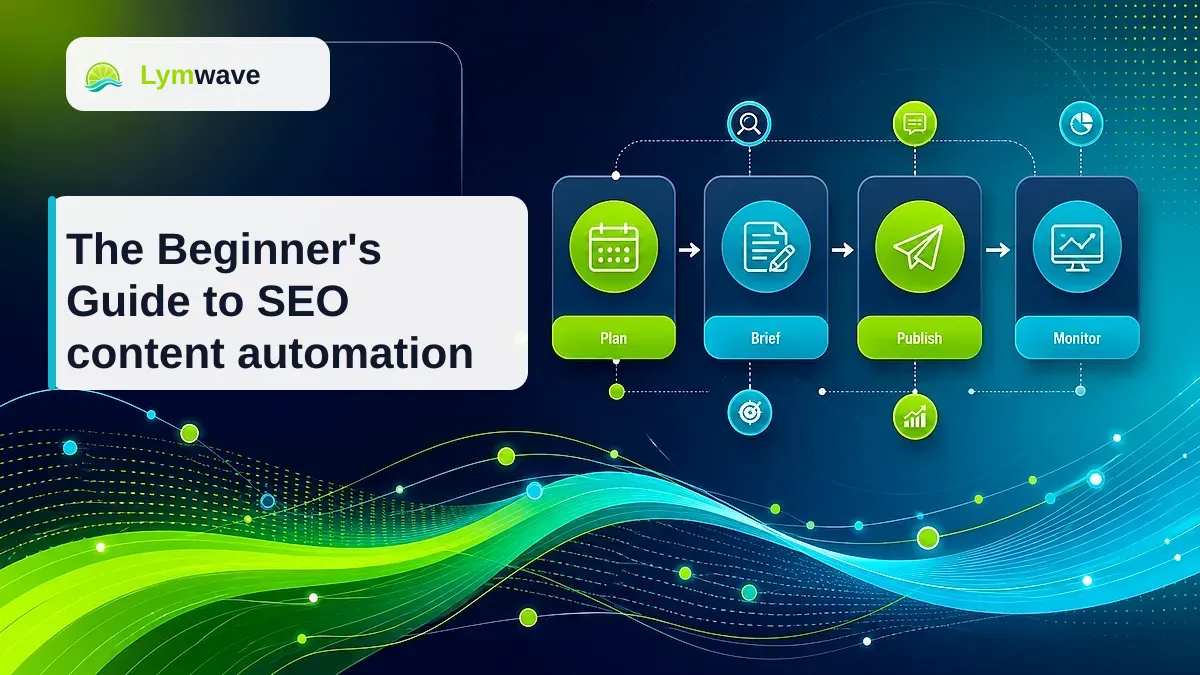
This guide sits in the AI SEO Automation topic cluster as a supporting resource.
Why SEO content automation matters
SEO content automation matters because most small content teams do not struggle with ideas alone. They struggle with turning ideas into useful briefs, reviewed drafts, complete metadata, internal links, publishing steps, and refresh decisions without losing consistency.
Quick answer: SEO content automation is the practice of using structured workflows and AI-assisted tools to plan, draft, optimize, publish, measure, and improve search content while keeping human judgment responsible for intent, accuracy, and usefulness.
For SaaS founders, small business owners, and content marketers, the value is not simply producing more pages. The value is making the content operation repeatable. A repeatable workflow helps each article answer a real question, fit a topic cluster, include clear metadata, and connect to related posts after publication.
This matters more now because search visibility is shaped by SEO, AEO, and GEO together. A page needs to be discoverable in search results, answer-friendly for direct summaries, and clear enough for AI systems to understand the entities and workflow behind the topic. Automation can support all three, but only when the process is built around quality controls.
The beginner mistake is thinking automation replaces strategy. It does not. It turns strategy into a system.
What content automation means for search
Content automation for search means using software and AI to handle repeatable parts of the content lifecycle. That can include keyword clustering, search intent notes, briefs, draft outlines, metadata, internal-link suggestions, schema preparation, publishing exports, and refresh reminders.
It does not mean publishing raw AI drafts at scale. Automated SEO content still needs a clear reader, a useful answer, accurate claims, and editorial review. A workflow that skips those parts will usually create content that is technically complete but strategically weak.
Think of SEO content automation as a set of connected steps:
| Step | What automation can help with | What still needs judgment |
|---|---|---|
| Plan | Group topics, map intent, prioritize clusters | Decide what is worth publishing |
| Brief | Draft sections, questions, entities, links | Confirm the article has a useful angle |
| Write | Produce a structured first draft | Improve accuracy, specificity, and tone |
| Optimize | Check metadata, headings, answers, schema | Remove stuffing and unsupported claims |
| Publish | Export or schedule the approved post | Verify formatting and public URL behavior |
| Improve | Flag stale posts and query changes | Decide what to update and why |
This is where an AI content workflow becomes useful. It gives the team a consistent path from topic to published article, but it should also create checkpoints. Those checkpoints keep automation from turning into a content mill.
For a broader operating model, pair this beginner workflow with a content engine guide that explains how consistent planning, review, and publishing work together.
How to approach an automated SEO content workflow
Start with a small workflow. Beginners often try to automate every step at once, then spend more time fixing the system than publishing useful content. A better first version covers planning, briefing, drafting, review, publishing, and measurement with lightweight rules.
Use this practical workflow:
- Choose one topic cluster. Pick a theme your audience already asks about, such as AI SEO automation or content planning.
- Define search intent. Decide whether the reader needs a beginner guide, checklist, comparison, tutorial, or troubleshooting article.
- Create the brief. Include the primary keyword, secondary terms, audience, questions answered, internal links, and entities.
- Draft from the brief. Use AI to create a structured draft, but keep the goal narrow: a useful first version, not a publish-ready final.
- Review for usefulness. Check whether the introduction answers the main question, each section adds something new, and every claim is supportable.
- Optimize for SEO, AEO, and GEO. Confirm metadata, one H1, logical headings, direct answer passages, entity context, and visible FAQ answers.
- Publish with links. Connect the post to existing resources only when those pages are live and relevant.
- Measure after publishing. Watch impressions, clicks, query fit, engagement, and whether the post needs a refresh.
If you need a planning template, start with how to create a 30-day SEO content plan with AI. The calendar matters less than the discipline behind it: each post should have a job before it enters the queue.
For beginners, the most useful rule is simple: automate the repeatable work, not the accountability. Let tools speed up briefs, drafts, metadata, and checks. Keep humans responsible for whether the article is true, useful, and worth publishing.
Here is a simple way to decide what belongs in your first automated workflow:
| Workflow part | Good beginner automation | Wait until later |
|---|---|---|
| Topic planning | Group ideas by cluster and funnel stage | Fully autonomous prioritization |
| Briefs | Generate intent, questions, sections, and link targets | Publishing every generated brief |
| Drafting | Create a structured first draft from approved inputs | Skipping editorial review |
| Metadata | Suggest titles, descriptions, canonical paths, and social copy | Auto-changing live metadata without checks |
| Internal links | Recommend existing posts that match the topic | Linking to planned pages that are not published |
| Refreshes | Flag old posts with query or performance drift | Rewriting high-value pages without a reviewer |
A beginner setup should also include a short editorial checklist. Before any draft is published, ask whether the article names the reader, answers the main question quickly, explains the workflow in plain language, and avoids claims the team cannot support. That checklist can be simple, but it should be visible inside the workflow.
The first month should be treated as calibration. Track which briefs produce useful drafts, where reviewers keep making the same corrections, and which metadata suggestions need rewriting. Those patterns tell you what to improve in the prompts, templates, and approval steps.
How this supports SEO, AEO, and GEO
SEO content automation supports SEO by making the basics harder to forget. A structured workflow can require a clean slug, unique title, meta description, canonical URL, crawlable content, internal links, and a focused topic before publication.
It supports AEO by making direct answers part of the draft instead of an afterthought. A beginner guide should quickly define the concept, explain the workflow, and answer common questions in visible copy. That makes the page easier for readers and answer engines to summarize.
It supports GEO by improving entity clarity. If a post discusses AI SEO Automation, AI content automation, SEO, AEO, GEO, and automated SEO content, those concepts should be explained in context. The article should make it clear how the entities relate instead of dropping them into a list.
Use this review pass before publishing:
| Review area | Beginner-friendly check |
|---|---|
| Intent | Does the article answer the query a beginner actually has? |
| Structure | Is there one H1 and a logical H2 sequence? |
| Direct answer | Can the reader understand the topic in the first few paragraphs? |
| Entity context | Are key concepts connected in plain language? |
| Internal links | Do links point to live, relevant resources? |
| Metadata | Do title, description, canonical, and social metadata match the page? |
| Claims | Are promises realistic and unsupported metrics avoided? |
For a deeper optimization pass, use how to optimize blog posts for SEO, AEO, and GEO.
One practical difference between a beginner workflow and a mature one is the amount of evidence used. A beginner workflow might rely on topic clusters, known customer questions, and basic search intent. A mature workflow can add Google Search Console query data, crawl findings, conversion notes, support questions, and historical refresh results.
That does not mean beginners should wait for perfect data. It means the workflow should leave room for better inputs later. Start with a clear content brief and a manual review. Add richer demand signals once the site has enough published pages and search data to make those signals meaningful.
The same principle applies to schema. BlogPosting, FAQPage, and BreadcrumbList schema are useful when they match visible content. They are not a substitute for the article itself. If the FAQ section is thin or disconnected, fix the visible answers before worrying about the structured data.
Common mistakes to avoid
The first mistake is automating before the strategy is clear. If the audience, topic cluster, and intent are vague, automation will only create vague content faster.
The second mistake is treating AI drafts as final articles. A draft can save time, but it still needs editing for accuracy, examples, internal links, repetition, and unsupported claims.
The third mistake is keyword stuffing. Using the primary keyword naturally is helpful. Repeating it in every heading and paragraph makes the article harder to read and less credible.
The fourth mistake is publishing disconnected posts. SEO content automation should strengthen a content library, not create isolated pages. Every article should connect to relevant existing posts when those links help the reader.
The fifth mistake is ignoring measurement. A published post is not finished forever. Search queries change, reader questions change, and the product context changes. A good workflow includes refresh triggers.
The sixth mistake is trying to automate trust. Tools can check for missing metadata, thin sections, and broken links. They cannot decide whether an example is honest, whether a claim is overreaching, or whether the article deserves to exist.
The seventh mistake is measuring only production volume. Publishing more posts can be useful, but volume by itself does not prove the workflow is working. Track whether articles are indexed, whether they attract relevant queries, whether readers continue to related resources, and whether older posts become easier to refresh.
The eighth mistake is using the same section pattern for every article. Templates are helpful, but every topic still needs its own angle. A beginner guide, checklist, comparison, and troubleshooting post should not all feel like the same article with different keywords swapped in.
Finally, avoid hiding uncertainty. If a recommendation depends on the user's CMS, team size, review capacity, or publishing destination, say so. Clear constraints make automated content more trustworthy because readers can tell where the advice applies.
Frequently asked questions
What should beginners know about SEO content automation?
Beginners should know that SEO content automation is a workflow discipline, not just an AI writing shortcut. It helps teams move from topic selection to brief, draft, optimization, publishing, and refresh with fewer missed steps.
How does SEO content automation support SEO, AEO, and GEO?
It supports SEO through consistent metadata, structure, links, and intent alignment. It supports AEO through direct answers and FAQ-ready sections. It supports GEO by explaining entities, categories, and workflows clearly enough for AI systems to understand the page.
What should you automate first?
Start with briefs, outlines, metadata checks, internal-link suggestions, and refresh reminders. Those steps are repeatable and low-risk when reviewed. Avoid fully automated publishing until the review process is reliable.
What mistakes should beginners avoid with SEO content automation?
Avoid raw AI publishing, vague strategy, keyword stuffing, disconnected posts, unsupported claims, and workflows that measure output volume but ignore usefulness.
Can small teams use SEO content automation?
Yes. Small teams often benefit because automation reduces coordination overhead. The key is keeping the workflow small enough to review carefully while still making planning, drafting, and publishing more consistent.
Useful next reads
AI SEO Automation Guide: How to Build a Content Engine That Publishes Consistently explains practical SEO, AEO, and GEO workflows for planning, publishing, measuring, and improving useful content consistently.
How to Create a 30-Day SEO Content Plan with AI explains practical SEO, AEO, and GEO workflows for planning, publishing, measuring, and improving useful content consistently.
How to Optimize Blog Posts for SEO, AEO, and GEO explains practical SEO, AEO, and GEO workflows for planning, publishing, measuring, and improving useful content consistently.
Turn this into a working content system
Audit your content, find AI visibility gaps, and build a publishing workflow that compounds.