

SEO content automation for Small Businesses
SEO content automation for Small Businesses explains practical SEO, AEO, and GEO workflows for planning, publishing, measuring, and improving useful content consistently.
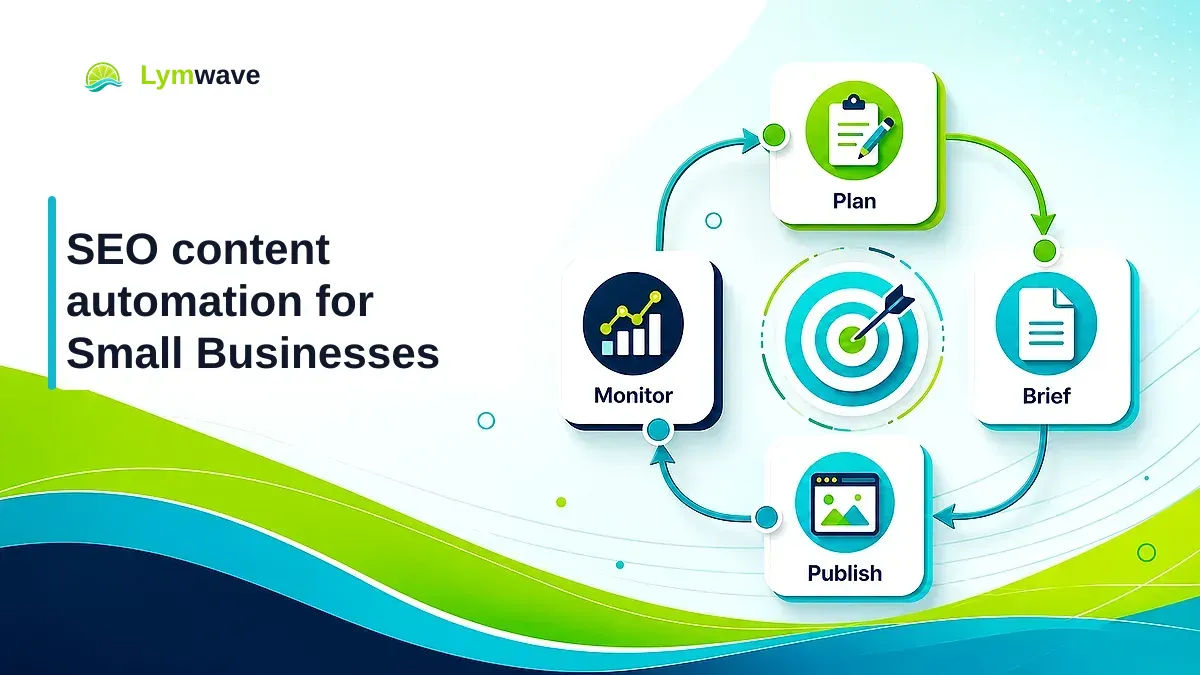
This guide sits in the AI SEO Automation topic cluster as a supporting resource.
Why SEO content automation for Small Businesses matters
Quick answer: SEO content automation for small businesses is a structured way to plan, create, optimize, publish, and improve content without turning every article into a custom project. It works best when automation handles repeatable workflow steps and humans keep strategy, quality, and customer context in the loop.
Small businesses rarely lose organic growth because they lack ideas. They lose momentum because content work becomes irregular. One week there is time to write. The next week sales, operations, hiring, support, and delivery take over. Search visibility needs consistency, but small teams often have no dedicated content operations role to protect that rhythm.
That is where SEO content automation can help. The goal is not to publish more words for the sake of volume. The goal is to make the useful parts of content marketing repeatable: choosing topics, matching search intent, building briefs, drafting, reviewing, adding metadata, publishing, measuring, and refreshing posts that start to age.
For a small business, the right AI content workflow should feel like a practical operating system. It should help the team answer buyer questions, cover service or product topics, create content for SEO, AEO, and GEO, and keep a calendar moving without asking the owner or marketer to start from a blank page every time.
The risk is treating automation as a shortcut around judgment. Thin articles, generic examples, weak internal links, and unsupported claims can damage trust. A useful workflow keeps the content specific to the business and its customers.
What SEO content automation for Small Businesses means
SEO content automation for small businesses means using repeatable systems and AI-assisted steps to turn business knowledge into search-ready content. It can include keyword grouping, content briefs, draft generation, metadata, internal-link suggestions, image creation, scheduling, publishing integrations, and refresh recommendations.
The simplest definition is this: automation handles the workflow, while the business supplies the judgment. The system can suggest a content plan, draft an article, and prepare metadata. The team still decides whether the topic matters, whether the examples are true, and whether the article reflects the business well.
This distinction matters because small businesses need leverage, not noise. A solo founder, local operator, consultant, ecommerce owner, or lean SaaS team cannot afford a complicated publishing machine that requires constant supervision. The workflow has to reduce effort while still producing content that a reader would trust.
A practical automated SEO content workflow usually includes these parts:
| Workflow layer | What automation can do | What the team should still own |
|---|---|---|
| Planning | Group topics, prioritize intent, map clusters | Choose what matches the business model |
| Briefing | Create search intent, headings, entities, and questions | Add customer context and positioning |
| Drafting | Produce a structured first draft | Check accuracy, examples, and usefulness |
| Optimization | Suggest metadata, FAQs, links, and schema context | Approve language and claims |
| Publishing | Prepare scheduled posts and destination-ready output | Confirm timing and final review |
| Measurement | Surface rankings, clicks, visibility, and refresh needs | Decide which pages deserve updates |
The best result is a calm content pipeline. Instead of asking "what should we write today?", the team sees the next topic, the reason it matters, the draft, the review points, and the publishing status.
For a broader operating model, connect this workflow to a full content engine with planning, review, publishing, and refresh loops.
How to approach SEO content automation for Small Businesses
Start with a narrow workflow. Small businesses do not need a giant content system on day one. They need a reliable path from topic to published article.
Use this sequence:
- Define the audience. Pick one clear reader group, such as local buyers, SaaS evaluators, ecommerce shoppers, agency prospects, or existing customers who need education.
- Collect real questions. Pull questions from sales calls, support tickets, onboarding forms, Google Search Console, customer emails, and competitor pages.
- Group topics into clusters. Build clusters around services, product use cases, pain points, comparisons, and how-to workflows.
- Choose one publishing cadence. One strong article per week is better than a burst of ten thin posts followed by silence.
- Create a reusable brief template. Include search intent, target reader, key entities, internal links, examples, claims to avoid, and desired next step.
- Generate a first draft. Use AI SEO automation for structure and momentum, not as the final editor.
- Review against a checklist. Check factual accuracy, local or product details, headings, metadata, internal links, and the direct answer.
- Publish and measure. Track impressions, clicks, AI visibility, conversion-assisted pages, and posts that need a refresh.
This workflow keeps the process small enough to manage. It also creates a feedback loop. If articles are too generic, improve the brief. If drafts are too long or unfocused, tighten the structure. If posts rank but do not convert, improve the call to action and internal links.
Small teams should also separate "new content" from "refresh content." A new post helps cover a missing question or cluster. A refresh improves an existing page that already has impressions, rankings, or relevance. Automated SEO content works better when both paths exist.
If you are planning the first month of topics, the process in creating a 30-day SEO content plan with AI is a useful next step.
How this supports SEO, AEO, and GEO
SEO, AEO, and GEO all depend on clear, useful, well-structured information. Automation can support all three when the workflow is built around intent and entities rather than only keywords.
For SEO, the workflow helps a small business cover topics consistently. It can map content clusters, add descriptive titles, improve metadata, build internal links, and create articles that answer search demand. This supports crawlable, indexable content that helps search engines understand what the business does.
For AEO, the workflow makes answers easier to extract. A good article includes a direct answer near the top, clear definitions, concise explanations, FAQ sections, and headings that mirror real questions. That gives answer engines and search features cleaner material to summarize.
For GEO, the workflow strengthens entity clarity. Generative systems need consistent signals about the brand, category, audience, product, services, and workflows. A content library that repeatedly explains those entities in plain language is easier for AI systems to understand and cite.
Use this simple optimization map:
| Goal | Content signal | Practical example |
|---|---|---|
| SEO | Search intent and internal links | Link service posts to guides and comparison pages |
| AEO | Direct answers and FAQ structure | Answer the main question in the first section |
| GEO | Entity consistency and source clarity | Use consistent language for the brand, offer, and audience |
| Conversion | Reader-specific examples | Show how the workflow applies to the business type |
Automated SEO content should also create supporting assets: meta titles, meta descriptions, image alt text, schema-ready FAQs, and related-post suggestions. These are small tasks, but they matter when the team publishes regularly.
For a deeper optimization pass, use the framework in optimizing blog posts for SEO, AEO, and GEO.
Common mistakes to avoid
The first mistake is automating before the business has clear positioning. If the system does not know who the content is for, what the business sells, and which problems matter, it will produce safe but forgettable articles.
The second mistake is chasing volume too early. Small businesses do not need hundreds of posts if the first twenty are thin, off-brand, or disconnected from buyer questions. Start with a focused cluster and make each article useful.
The third mistake is ignoring review. AI can produce confident language about products, locations, regulations, integrations, pricing, or outcomes. A human should check claims before publishing, especially when the article touches customer decisions.
The fourth mistake is treating SEO as only keywords. Keywords help define demand, but content also needs structure, examples, links, entities, and a reason for the reader to trust the page.
The fifth mistake is skipping measurement. Without data, the team cannot see which posts attract impressions, which articles support conversions, which topics need a refresh, and which automated drafts require too much editing.
Use a small governance checklist before every post goes live:
- The article answers one clear search intent.
- The introduction gives a direct answer.
- The examples match the business and audience.
- The claims are accurate and reviewable.
- The metadata is unique.
- Internal links point to existing useful pages.
- The FAQ answers real questions.
- The next step is relevant and not pushy.
SEO content automation for small businesses works when it creates a dependable publishing habit without lowering editorial standards. That is the balance to protect.
Frequently asked questions
What should you know about SEO content automation for Small Businesses?
You should know that SEO content automation for small businesses is most useful as a workflow system, not just a writing tool. It helps plan, brief, draft, optimize, publish, measure, and refresh content while the business keeps control over strategy, accuracy, and final approval.
How does SEO content automation for Small Businesses support SEO, AEO, and GEO?
It supports SEO by creating consistent, search-intent-driven content. It supports AEO by adding direct answers, clear headings, definitions, and FAQ sections. It supports GEO by reinforcing consistent entities such as the brand, audience, category, services, and workflows across the content library.
What mistakes should you avoid with SEO content automation for Small Businesses?
Avoid publishing generic drafts without review, chasing volume before quality, ignoring internal links, using keyword-stuffed headings, skipping measurement, and letting automation make unsupported claims. Keep the workflow focused on useful content that reflects the business accurately.
How often should a small business publish automated SEO content?
Start with a cadence the team can review properly. For many small businesses, one article per week is more sustainable than daily publishing. Increase cadence only when planning, review, publishing, and measurement are running smoothly.
Can AI SEO automation replace a content marketer?
It can reduce manual production work, but it should not replace content judgment. A marketer or owner still needs to choose priorities, add customer context, review claims, and decide how content supports the business.
Useful next reads
AI SEO Automation Guide: How to Build a Content Engine That Publishes Consistently explains practical SEO, AEO, and GEO workflows for planning, publishing, measuring, and improving useful content consistently.
How to Create a 30-Day SEO Content Plan with AI explains practical SEO, AEO, and GEO workflows for planning, publishing, measuring, and improving useful content consistently.
How to Optimize Blog Posts for SEO, AEO, and GEO explains practical SEO, AEO, and GEO workflows for planning, publishing, measuring, and improving useful content consistently.
Turn this into a working content system
Audit your content, find AI visibility gaps, and build a publishing workflow that compounds.