

How to Use AI Keyword Research to Improve Organic Traffic
How to use AI keyword research to improve organic traffic explains practical SEO, AEO, and GEO workflows for planning, publishing, measuring, and improving useful content consistently.
This guide sits in the AI SEO Automation topic cluster as a supporting resource.
Why How to Use AI keyword research to Improve organic traffic matters
Quick answer: use AI keyword research to improve organic traffic by turning query data into intent groups, content briefs, answer sections, internal-link targets, and refresh priorities. AI is useful for clustering and pattern recognition, but the traffic lift comes from publishing pages that answer real questions better than the current search results.
Keyword research used to be a spreadsheet job. Teams exported terms, sorted by volume, picked a few phrases, and hoped the final article would make sense. That approach breaks down when a small team needs to publish consistently across SEO, AEO, and GEO. The list gets long, the intent gets blurry, and the calendar fills with topics that sound important but do not have a clear job.
AI keyword research helps by finding patterns faster. It can group similar queries, identify question formats, spot content gaps, and suggest how a topic should be framed for a reader. For SaaS founders, small business owners, and content marketers, that means less time sorting raw keywords and more time deciding what should actually be written, refreshed, linked, or measured.
The important shift is simple: AI should not replace judgment. It should make judgment easier. The best workflow uses automation to organize search data, then uses human review to choose the angle, product relevance, examples, and publishing priority.
What How to Use AI keyword research to Improve organic traffic means
Using AI keyword research means using AI to convert scattered search demand into structured content decisions. The output should not be a bigger keyword list. It should be a plan that explains which topic to cover, what intent the page must satisfy, which entities belong in the article, what existing pages should link to it, and how the page will be improved after launch.
A practical AI keyword workflow usually produces five assets:
| Asset | What it answers | Why it helps |
|---|---|---|
| Intent cluster | What is the searcher trying to do? | Keeps one page focused on one job. |
| Content brief | What should the article cover? | Turns research into a usable draft plan. |
| Entity map | Which people, tools, workflows, and categories matter? | Helps SEO and AI systems understand context. |
| Internal-link plan | Which related pages should connect? | Builds topical authority instead of isolated posts. |
| Refresh trigger | What should be checked later? | Makes organic growth iterative. |
This is especially useful when the same keyword family includes beginners, evaluators, and buyers. For example, an AI SEO automation cluster may include definitions, checklists, tool comparisons, publishing workflows, and reporting questions. Treating all of them as one article creates a shallow page. Treating every phrase as a separate article creates clutter. AI-assisted grouping helps find the right middle.
The goal is not to chase every query. The goal is to choose the topics where your site can provide a specific, credible answer and connect that answer to the rest of your content system.
How to approach How to Use AI keyword research to Improve organic traffic
Start with a seed topic, not a blank prompt. A useful seed might be a product category, customer pain, Search Console query, competitor topic, or existing page that needs support. Feed AI the seed topic plus audience context, business goal, and any available keyword or Search Console data.
Next, ask AI to group the terms by search intent. Do not accept the first grouping automatically. Review whether each cluster represents a real reader need. Merge clusters that share the same intent, split clusters that mix different jobs, and remove terms that do not match your audience.
Then turn each useful cluster into a decision: create a new article, refresh an existing page, add a section, improve metadata, or hold the idea. This step prevents automated SEO content from creating too many thin URLs.
For new articles, create a brief before drafting. The brief should include the primary question, secondary questions, target reader, search intent, suggested H2s, internal links, entity coverage, proof limits, and a short answer that can appear near the top of the page. If you need a calendar-level process, the guide to creating a 30-day SEO content plan with AI shows how to turn grouped topics into a publishing sequence.
For existing pages, compare the AI cluster against what the page already answers. If the page has impressions but weak clicks, stale examples, missing FAQs, or unclear sections, refresh the page before creating a new URL. AI can suggest missing subtopics, but a human should confirm whether those additions fit the page's purpose.
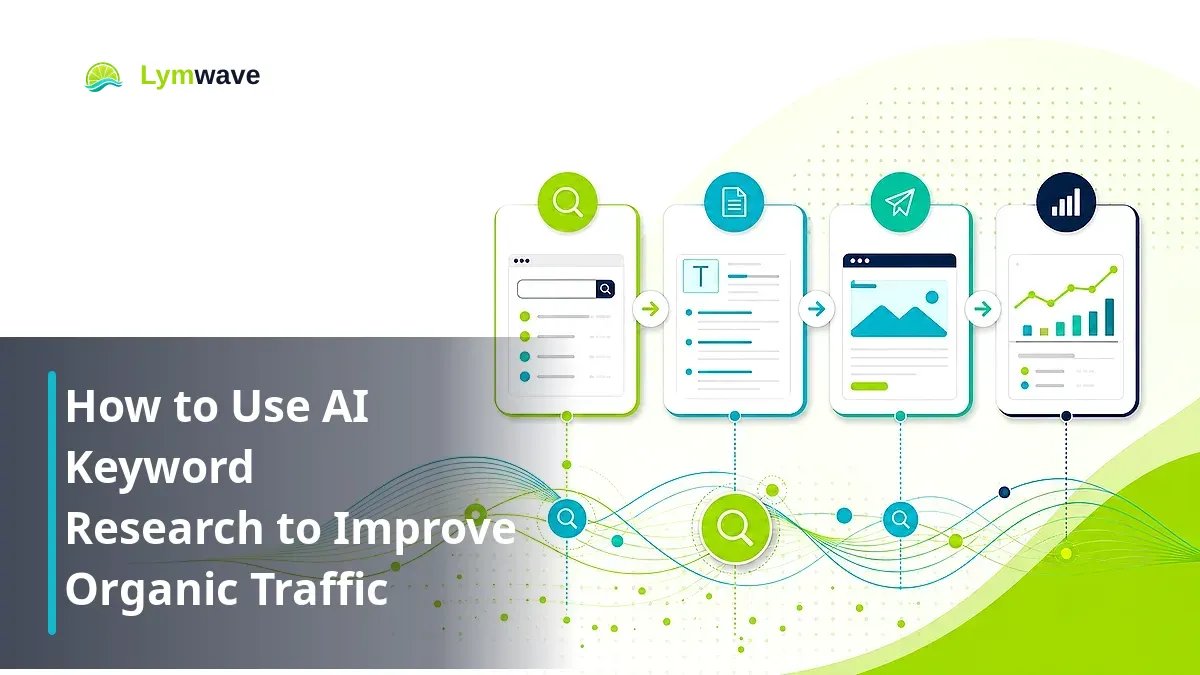
A strong workflow looks like this:
- Collect seed topics, query data, and audience context.
- Cluster terms by intent, not just similar wording.
- Choose the best action for each cluster.
- Generate briefs with direct answers, entity coverage, and internal-link targets.
- Draft or refresh content against the brief.
- Review claims, examples, structure, links, and metadata.
- Publish, monitor, and schedule refresh checks.
This keeps the AI content workflow useful. Automation handles the repetitive organization. The team still owns positioning, quality, and final judgment.
How this supports SEO, AEO, and GEO
AI keyword research supports SEO by improving the match between a page and search intent. Instead of writing around one phrase, the team can understand the cluster of related questions, compare the current search results, and build a page that answers the topic in a complete but focused way.
It supports AEO because answer engines need concise, extractable explanations. A good brief can specify the short answer, definition, checklist, comparison table, and FAQ questions before the article is drafted. That makes the finished content easier to quote, summarize, and reuse in answer-style interfaces.
It supports GEO because generative systems rely on entity and relationship clarity. A post about AI keyword research should consistently connect terms such as AI SEO automation, SEO content automation, content briefs, organic traffic, internal links, Search Console, topical authority, AEO, and GEO. The stronger those relationships are across a content cluster, the easier the site is to understand.
Think about the three layers this way:
| Layer | Keyword research question | Content output |
|---|---|---|
| SEO | Which intent can this page satisfy? | Focused article, metadata, internal links |
| AEO | Which question needs a direct answer? | Summary, definition, FAQ, checklist |
| GEO | Which entities and workflows need context? | Cluster language, related posts, clear relationships |
The best results come when one workflow serves all three. A single well-briefed article can target classic organic search, answer-style discovery, and AI search visibility without becoming stuffed or awkward.
For quality control after drafting, use a structured review pass like the one in how to optimize blog posts for SEO, AEO, and GEO. Keyword research decides what the page should answer. Optimization checks whether the page actually answers it.
Common mistakes to avoid
The first mistake is treating AI output as truth. AI can cluster and summarize quickly, but it can also invent importance, misunderstand intent, or group terms that only look similar. Use it as a research assistant, then verify the logic.
The second mistake is prioritizing search volume over fit. A high-volume topic is not useful if it attracts the wrong reader, sits outside your product category, or repeats what your site already covers. Organic traffic matters more when it comes from people your business can actually help.
The third mistake is creating one article per keyword. Modern keyword research should group related phrases by intent. If ten terms all ask the same question, one strong page is usually better than ten thin ones.
The fourth mistake is skipping existing content. Many teams use AI keyword research only for new posts, even when the fastest improvement is refreshing an existing page. Search Console queries, low-click pages, and stale articles can be better starting points than brand-new ideas.
The fifth mistake is drafting before briefing. A draft without a clear brief often becomes generic because the model has no firm reader, angle, answer target, or proof standard. The brief is where strategy becomes visible.
The sixth mistake is overusing exact-match phrases. Include the primary keyword naturally, especially in the H1, intro, and FAQ, but do not repeat it in every heading. Related entities and clear explanations usually do more for readers than mechanical repetition.
The final mistake is measuring only publishing volume. Track whether the workflow created better briefs, cleaner internal links, stronger answer sections, useful refreshes, and more focused articles. Organic traffic improves through compounding quality, not just output speed.
Frequently asked questions
What should you know about using AI keyword research to improve organic traffic?
You should know that AI keyword research is most useful when it turns raw queries into intent clusters, briefs, content decisions, internal links, and refresh actions. It should help you decide what to write or improve, not just produce more keywords.
How does using AI keyword research support SEO, AEO, and GEO?
It supports SEO by aligning pages with search intent, AEO by planning direct answers and FAQs, and GEO by clarifying entities, categories, and workflow relationships across a topic cluster.
What is the safest first use of AI keyword research?
Start with clustering and brief creation. Ask AI to group related queries, identify the main question behind each group, suggest a page type, and outline what a useful answer should include before you generate any draft.
Should AI keyword research create new posts or refresh existing ones?
It should support both. Create a new post when the intent is not covered by an existing URL. Refresh an existing page when the topic is already present but the answer, metadata, examples, FAQ coverage, or internal links are weak.
What mistakes should you avoid with AI keyword research?
Avoid trusting clusters without review, chasing volume without business fit, making one article per keyword, ignoring existing content, drafting without briefs, stuffing exact-match phrases, and measuring success only by how many pages were published.
Useful next reads
AI SEO Automation Guide: How to Build a Content Engine That Publishes Consistently explains practical SEO, AEO, and GEO workflows for planning, publishing, measuring, and improving useful content consistently.
How to Create a 30-Day SEO Content Plan with AI explains practical SEO, AEO, and GEO workflows for planning, publishing, measuring, and improving useful content consistently.
How to Optimize Blog Posts for SEO, AEO, and GEO explains practical SEO, AEO, and GEO workflows for planning, publishing, measuring, and improving useful content consistently.
Turn this into a working content system
Audit your content, find AI visibility gaps, and build a publishing workflow that compounds.