

How to Prioritize SEO Content Automation in Your Content Plan
How to prioritize SEO content automation in your content plan explains practical SEO, AEO, and GEO workflows for planning, publishing, measuring, and improving useful content consistently.
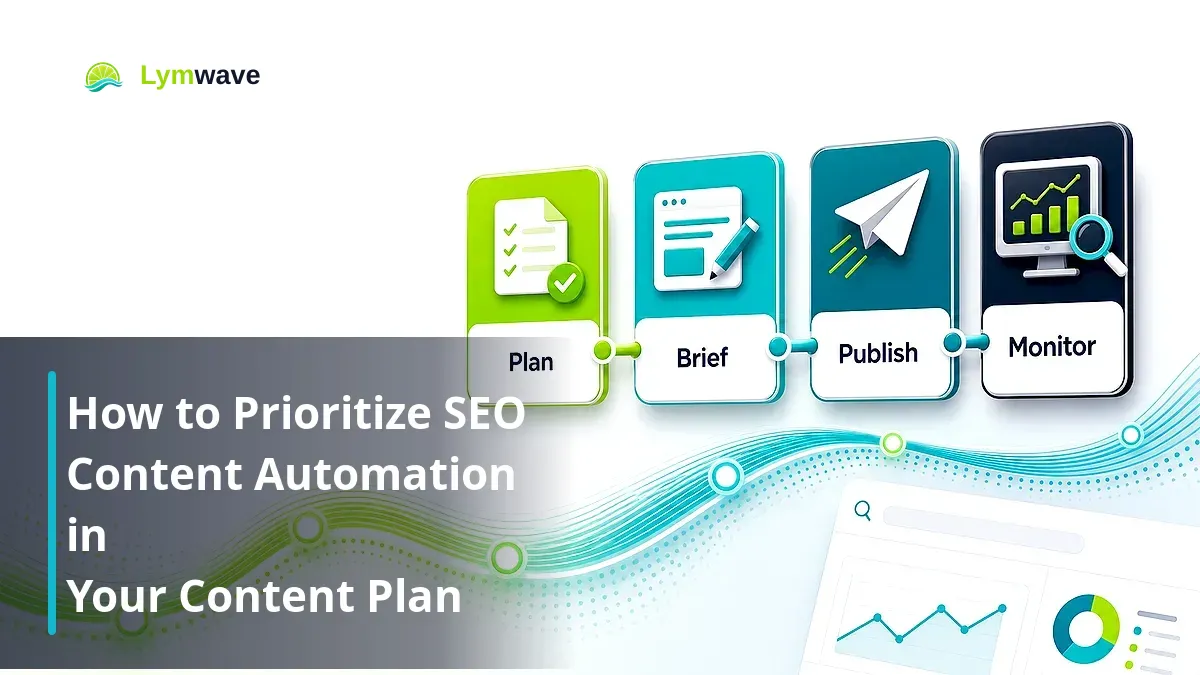
This guide sits in the AI SEO Automation topic cluster as a supporting resource.
Why How to Prioritize SEO content automation in Your Content Plan matters
Quick answer: prioritize SEO content automation in your content plan by automating the work that is repeatable, tied to a clear search intent, connected to a real business goal, easy to review, and useful for strengthening a topic cluster. Start with planning, briefs, metadata, internal-link suggestions, quality checks, and refresh signals before automating publishing decisions.
SEO content automation can make a small team feel much larger. It can turn keyword notes into briefs, briefs into drafts, drafts into metadata, and published pages into refresh queues. The risk is that speed can hide weak choices. A content calendar full of automated drafts is not the same thing as a strategy.
For SaaS founders, small business owners, and content marketers, prioritization is the difference between a helpful AI content workflow and a noisy backlog. The right order helps the team decide which pages deserve new articles, which existing URLs need refreshes, and which tasks should stay manual because the claims, audience, or offer still need human judgment.
The goal is not to publish every possible topic. The goal is to choose the content work where automation improves consistency without flattening judgment. A good priority model keeps the plan focused on useful answers, clean structure, internal links, entity clarity, and practical editorial review.
What How to Prioritize SEO content automation in Your Content Plan means
Prioritization means deciding which content tasks automation should touch first, and why. In a mature plan, that includes more than new article generation. It also includes content briefs, search-intent classification, existing-page refreshes, metadata, FAQ coverage, schema checks, image preparation, internal links, publishing readiness, and performance reviews.
The simplest way to prioritize is to score every candidate against five signals:
| Signal | What to ask | Why it matters |
|---|---|---|
| Search intent | Does the topic answer a clear question or workflow? | Automation works better when the page has an obvious job. |
| Business fit | Does the content support a real product, audience, or offer? | Automated SEO content should still move the right readers forward. |
| Cluster value | Will this strengthen an existing topic cluster? | Related pages help search engines and AI systems understand context. |
| Review risk | Can the team verify the claims and examples quickly? | Higher-risk topics need tighter editorial gates. |
| Measurement path | Can performance be checked after launch? | Priorities should lead to learnable outcomes, not just more URLs. |
A page with modest search volume can still be a high priority if it explains a buyer question, supports a core feature, or connects several existing posts. A keyword with higher volume can be a lower priority if the intent is vague, the audience is wrong, or the team cannot add anything useful beyond generic advice.
This is where SEO content automation differs from simple AI writing. The best systems help you decide whether a topic needs a new draft, a stronger brief, a refresh, an internal-link pass, or a better answer section. That choice should happen before the draft exists.
How to approach How to Prioritize SEO content automation in Your Content Plan
Start with the backlog, not the blank page. Group every idea into one of four work types: new article, refresh, optimization pass, or hold. This prevents automation from treating every topic as a new blog post.
New articles should answer a distinct question that is not already covered well. They should have a clear reader, an existing or planned cluster relationship, and enough detail to justify a new URL.
Refreshes should target published pages with stale examples, weak answer sections, outdated metadata, low click-through rate, mismatched search queries, or missing internal links. In many content plans, refreshes are more valuable than new drafts because they improve pages that already have crawl history.
Optimization passes are smaller tasks: rewrite a meta description, add a direct answer, improve FAQ coverage, update schema, add a featured image, or suggest links to related posts. These are ideal early automation wins because they are repeatable and easy to review.
Hold items are not failures. They are ideas that need more context before automation can help. Put a topic on hold when the audience is unclear, the business fit is weak, the claim burden is high, or the same intent is already served by another page.
Once the work type is clear, use a practical priority sequence:
-
Pick topics that support a current business goal or important cluster.
-
Confirm the search intent and the primary question the content must answer.
-
Decide whether the best action is a new article, a refresh, or a smaller optimization task.
-
Generate a brief before generating a draft.
-
Route the output through review checks for claims, examples, links, metadata, and usefulness.
-
Add a measurement or refresh trigger so the page can improve after publishing.
This sequence keeps automated SEO content grounded. It lets AI help with structure, consistency, and repetitive checks while the team still owns strategy, taste, positioning, and final approval.
If the content plan itself is still messy, start by organizing the calendar first. The guide to creating a 30-day SEO content plan with AI shows how to turn scattered ideas into a workable publishing sequence.
How this supports SEO, AEO, and GEO
Prioritization supports SEO because it connects content production to search intent, internal links, metadata, and refresh decisions. Instead of publishing a stream of disconnected posts, the team builds a library where each page has a role.
It supports AEO, or answer engine optimization, because answer-ready pages need deliberate structure. A topic may need a definition, a comparison, a checklist, a workflow, a short answer, or a set of FAQs. Prioritization helps choose the right format before drafting starts.
It supports GEO, or generative engine optimization, because AI systems need clear entity relationships. A prioritized plan repeats useful context across a cluster: product category, audience, workflow, problem, related terms, and the relationship between supporting articles and pillar guides.
Think of the three lenses this way:
| Lens | Priority question | Automation task |
|---|---|---|
| SEO | Which pages can earn or improve organic visibility? | Briefs, metadata, links, refresh tracking |
| AEO | Which questions need concise, extractable answers? | Direct answers, FAQs, definitions, checklists |
| GEO | Which entities and workflows need clearer context? | Cluster mapping, entity coverage, related posts |
The benefit is practical. A team can use one content plan to serve readers, classic search, answer engines, and AI search systems without creating separate workflows for each channel. The same article still needs to be useful first. Automation simply helps make the required pieces more consistent.
For a deeper quality pass after the draft exists, use the guide on optimizing blog posts for SEO, AEO, and GEO. Prioritization decides what enters the workflow; optimization decides whether the finished page is ready.
Common mistakes to avoid
The first mistake is prioritizing by search volume alone. Volume can be useful, but it does not tell you whether the topic fits your product, whether the searcher is the right audience, or whether the page belongs in the current cluster.
The second mistake is turning every idea into a new post. Sometimes the best move is to refresh an existing page, add internal links, improve metadata, or make the opening answer clearer. New URLs should earn their place.
The third mistake is automating drafts before automating briefs. A weak brief produces a weak draft faster. A strong brief defines the reader, intent, answer, entities, sections, links, proof limits, and review requirements before the writing starts.
The fourth mistake is skipping editorial gates. SEO content automation can reduce repetitive work, but humans still need to review claims, product positioning, examples, comparisons, and whether the piece says something useful.
The fifth mistake is overusing exact-match keyword language. A page can include the primary keyword naturally without repeating it in every heading. Related entities, examples, and clear explanations are usually more useful than mechanical repetition.
The sixth mistake is ignoring existing content. A library with stale posts, weak link paths, and outdated answers will not improve just because new automated articles are added. Refresh and optimization work should be part of the priority model.
The final mistake is measuring output instead of outcomes. Track how many prioritized briefs became useful pages, how many refreshes improved query fit, how many internal links were added, and whether published content answers the intended question.
Frequently asked questions
What should you know about prioritizing SEO content automation in your content plan?
You should know that prioritization is mainly a workflow decision. The best first candidates are repeatable tasks with clear intent, business relevance, low review risk, and a measurable path to improvement.
How does prioritizing SEO content automation support SEO, AEO, and GEO?
It supports SEO by keeping articles tied to intent, metadata, links, and refresh signals. It supports AEO by planning direct answers and FAQs. It supports GEO by making entity, category, and workflow context consistent across related pages.
Should you automate new articles or refreshes first?
Start with whichever has the clearer opportunity. If an existing page already earns impressions but has weak CTR, stale examples, or missing answers, refresh it first. If a cluster has a genuine gap that no existing page covers, create a new article.
What content tasks are safest to automate first?
Brief generation, metadata checks, internal-link suggestions, FAQ checks, schema alignment, image preparation, and refresh monitoring are usually safer first steps than fully automated publishing.
What mistakes should you avoid with SEO content automation?
Avoid prioritizing by volume alone, generating every idea as a new page, drafting without briefs, skipping review, stuffing exact-match phrases, and ignoring existing posts that need refreshes or better internal links.
Useful next reads
AI SEO Automation Guide: How to Build a Content Engine That Publishes Consistently explains practical SEO, AEO, and GEO workflows for planning, publishing, measuring, and improving useful content consistently.
How to Create a 30-Day SEO Content Plan with AI explains practical SEO, AEO, and GEO workflows for planning, publishing, measuring, and improving useful content consistently.
How to Optimize Blog Posts for SEO, AEO, and GEO explains practical SEO, AEO, and GEO workflows for planning, publishing, measuring, and improving useful content consistently.
Turn this into a working content system
Audit your content, find AI visibility gaps, and build a publishing workflow that compounds.