

AI Keyword Research for Small Businesses
AI keyword research for small businesses explains practical SEO, AEO, and GEO workflows for planning, publishing, measuring, and improving useful content consistently.
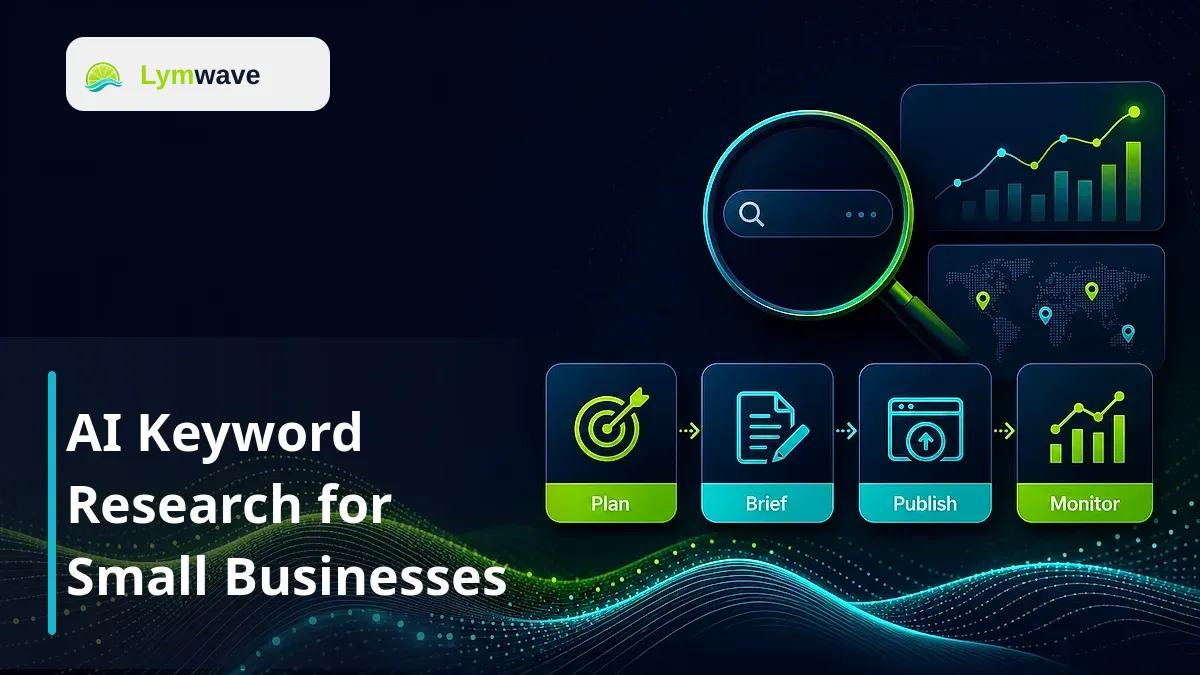
This guide sits in the AI SEO Automation topic cluster as a supporting resource.
Why AI keyword research matters for small businesses
Quick answer: AI keyword research for small businesses helps teams turn customer questions, service demand, local search intent, and content gaps into a focused plan for SEO, AEO, and GEO.
Small business keyword research has a different pressure than enterprise SEO. The team is usually smaller, time is tighter, and every article or landing page needs to justify its place. A long keyword spreadsheet can look useful, but it often creates more decisions than a busy owner or marketer can act on.
AI can help when it is used to organize demand around real customer needs. It can cluster messy keyword lists, separate local and non-local intent, surface common questions, and turn research into briefs that are easier to publish. The goal is not to chase every possible phrase. The goal is to find the topics that help likely customers understand a problem, compare options, trust the business, and take the next useful step.
For small businesses, useful keyword research should connect marketing to operations. A service company may need pages for core services, service areas, seasonal questions, pricing concerns, and maintenance advice. A local retailer may need category pages, buying guides, comparison content, and posts that answer before-visit questions. A small SaaS or professional services firm may need educational content that makes the product or service category easier to understand.
AI keyword research works best when it narrows the plan instead of expanding it endlessly.
What AI keyword research for small businesses means
AI keyword research for small businesses is the process of using AI-assisted analysis to find, group, prioritize, and brief content topics around customer intent. It combines keyword discovery, search intent classification, entity coverage, local relevance, and practical publishing decisions.
The output should be a content plan, not just a list of terms.
| Research layer | What it answers | Small business example |
|---|---|---|
| Service terms | What does the business sell or provide? | "emergency plumber near me" |
| Problem terms | What pain is the customer trying to solve? | "why is my water heater leaking" |
| Local intent | Where does the customer need help? | "roof repair in Austin" |
| Comparison terms | What options is the buyer weighing? | "bookkeeper vs accounting software" |
| Buying questions | What blocks a decision? | "how much does monthly bookkeeping cost" |
| Maintenance topics | What keeps customers engaged after purchase? | "how often to service an HVAC system" |
AI is useful because these layers overlap. A person might start with a broad question, then search for a local provider, then compare prices, then look for reviews or next steps. A good content plan connects those moments so the website feels helpful across the whole journey.
This is also where small businesses need discipline. Some keywords may have attractive volume but weak business value. Others may show low search volume but match a high-intent customer who is close to buying. AI can assist with grouping and scoring, but the business still needs to decide which topics are worth creating now.
How to approach AI keyword research for small businesses
Start with business context before asking AI for ideas. Gather the core services, locations served, best customers, common objections, seasonal demand, sales questions, and existing pages. If the business already has Google Search Console data, customer emails, call notes, chat transcripts, or sales FAQs, use those as inputs.
Then build a workflow:
- List the core offers. Capture every service, product category, or solution the business wants to be known for.
- Collect customer language. Pull questions from calls, emails, reviews, support tickets, sales notes, and search query reports.
- Separate intent types. Group keywords into informational, local, commercial, comparison, and post-purchase topics.
- Map topics to pages. Decide whether each topic needs a service page, location page, guide, FAQ, comparison article, or refresh to an existing page.
- Score by business value. Prioritize topics that match profitable services, urgent needs, strong local fit, or frequent customer questions.
- Create simple briefs. Include the target query, audience, search intent, internal links, key questions, examples, and review notes.
- Publish and measure. Track impressions, clicks, rankings, leads, calls, form submissions, and refresh opportunities.
If the team needs a calendar, use the process in how to create a 30-day SEO content plan with AI to turn the best topics into a realistic publishing schedule.
A simple priority scorecard can keep the workflow grounded:
| Priority factor | Strong signal | Weak signal |
|---|---|---|
| Customer relevance | The topic appears in real conversations | The topic only sounds related |
| Revenue fit | The topic supports a valuable service or product | The topic attracts low-fit traffic |
| Intent clarity | The searcher needs a clear next step | The query could mean many unrelated things |
| Local relevance | The topic connects to service areas or local needs | The content would be generic everywhere |
| Content gap | Current pages do not answer it well | An existing page already covers the topic |
For small teams, the best brief is usually short. A practical brief can include one primary query, three questions to answer, two internal links, one local or customer example, and one clear conversion path. That is enough structure to prevent generic copy without making the workflow heavy.
How this supports SEO, AEO, and GEO
Small businesses need content that works across traditional search, answer engines, and generative AI systems. The same page can support all three when it is specific, organized, and useful.
For SEO, AI keyword research helps the business build clearer topic clusters. A service page can link to supporting guides, comparison articles, maintenance advice, and location-specific pages. That gives readers useful next steps and helps search engines understand the business category, services, and areas served.
For AEO, the workflow should capture direct customer questions. The page should answer the main question early, use descriptive headings, include concise FAQ answers, and avoid long introductions before the useful information appears. The article on how to optimize blog posts for SEO, AEO, and GEO covers that review layer in more detail.
For GEO, small business content needs strong entity signals. The page should clearly name the business category, audience, services, locations, use cases, and related workflows. Generative systems are more likely to summarize a page accurately when the page states who it is for, what problem it solves, and how the topic connects to adjacent concepts.
AI keyword research can support all three when it captures:
- customer questions and direct answers
- service, product, and category language
- local modifiers and service-area context
- related entities, tools, and workflows
- internal links to relevant existing pages
- examples that match the audience
- metadata and schema aligned with visible content
- refresh signals from performance data
The risk is treating SEO, AEO, and GEO as separate content chores. They work better as one editorial system. A well-structured small business article can rank in search, answer a customer question, and become easier for AI systems to summarize because the page is clear about the problem, audience, and next step.
For teams building a repeatable system, the broader guide to building an AI SEO automation content engine shows how research connects to briefs, publishing, measurement, and refresh work.
Measurement should stay practical. Review which pages earn impressions, which queries bring clicks, which content assists leads, and which pages need better titles, answers, examples, or internal links. If a page earns impressions but few clicks, improve the title and meta description. If a page gets traffic but no inquiries, improve the offer connection and next step. If a page ranks for the wrong query, revisit the intent and structure.
Common mistakes to avoid
The first mistake is chasing high-volume keywords that do not match the business. A small business does not need traffic from everyone. It needs visibility with the customers it can actually serve.
The second mistake is ignoring local intent. Even when a topic is educational, location can matter. A guide can include service-area context, local regulations, seasonal conditions, or region-specific examples when those details are useful and accurate.
The third mistake is creating a separate article for every similar keyword. AI can generate many variations quickly, but thin near-duplicate pages can confuse readers and weaken the site. Group similar intent into one stronger page when the same answer would satisfy the searcher.
The fourth mistake is using AI output without review. Models can overstate claims, flatten customer nuance, or create generic advice that sounds polished but does not reflect the business. Review every brief and article for accuracy, usefulness, and fit.
The fifth mistake is forgetting existing pages. Sometimes the best SEO move is not a new article. It may be updating a service page, adding FAQs, improving internal links, or refreshing a guide that already has search visibility.
The sixth mistake is linking to pages that do not exist. Internal-link plans can include future ideas, but visible links should point only to published pages. Broken paths hurt readers and make the topic cluster weaker.
Frequently asked questions
What should small businesses know about AI keyword research?
AI keyword research is most useful when it turns customer questions, service demand, local intent, and content gaps into a focused publishing plan. It should help the business choose better topics, not simply produce more keywords.
How does AI keyword research support SEO, AEO, and GEO?
It supports SEO by organizing topic clusters, AEO by capturing direct questions and concise answers, and GEO by strengthening entity language around services, audiences, locations, and workflows.
Which keywords should a small business prioritize first?
Prioritize keywords with clear customer relevance, strong service or product fit, specific intent, local value when relevant, and a clear next step. A lower-volume high-intent phrase can be more valuable than a broad high-volume term.
Can AI replace manual keyword research for a small business?
No. AI can speed up discovery, clustering, and brief creation, but human review is still needed for business priorities, local context, customer nuance, and accuracy.
What should be included in an AI-generated keyword brief?
Include the target audience, primary query, search intent, local or service context, questions to answer, internal links, metadata, examples to include, and review checks for SEO, AEO, GEO, and business accuracy.
Useful next reads
AI SEO Automation Guide: How to Build a Content Engine That Publishes Consistently explains practical SEO, AEO, and GEO workflows for planning, publishing, measuring, and improving useful content consistently.
How to Create a 30-Day SEO Content Plan with AI explains practical SEO, AEO, and GEO workflows for planning, publishing, measuring, and improving useful content consistently.
How to Optimize Blog Posts for SEO, AEO, and GEO explains practical SEO, AEO, and GEO workflows for planning, publishing, measuring, and improving useful content consistently.
Turn this into a working content system
Audit your content, find AI visibility gaps, and build a publishing workflow that compounds.