

AI content briefs for Small Businesses
AI content briefs for Small Businesses explains practical SEO, AEO, and GEO workflows for planning, publishing, measuring, and improving useful content consistently.
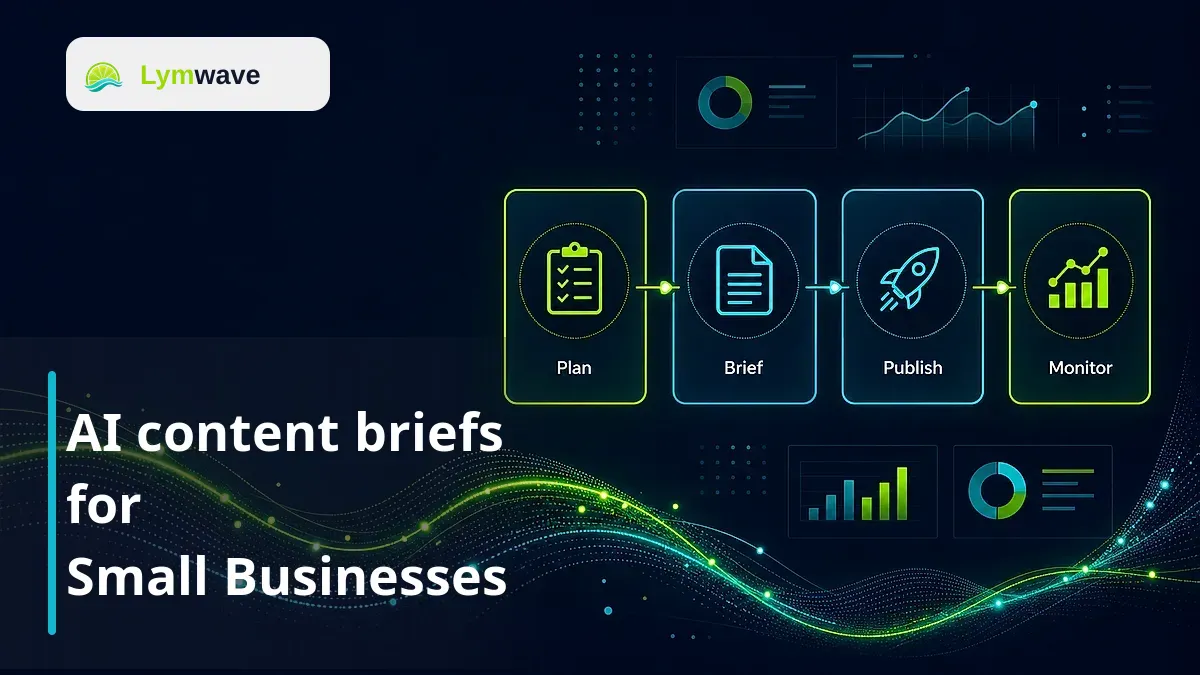
This guide sits in the AI SEO Automation topic cluster as a supporting resource.
Why AI content briefs for Small Businesses matters
Small businesses do not usually have the luxury of a large content team, a dedicated SEO strategist, and an editor who can rescue every rough draft. One person may be choosing topics, checking keywords, reviewing AI output, updating the website, and trying to keep the next customer conversation moving.
Quick answer: AI content briefs for Small Businesses turn a topic into a clear article plan before drafting starts. A good brief defines the reader, search intent, direct answer, entities, internal links, local or niche context, metadata, and review rules so AI SEO automation produces content that is easier to approve and more useful for real buyers.
This matters because AI can create a lot of words quickly, but words are not the same as a useful page. A small business article has to answer a specific question, show that the business understands the customer, and avoid sounding like the same generic overview a dozen competitors could publish.
The brief is the control point. It tells the AI content workflow what the article is for, what the reader already knows, what the business can credibly say, and which claims should stay out of the draft. That makes automated SEO content more practical for lean teams: less rewriting, fewer off-topic sections, and a clearer path from idea to published post.
For consideration-stage readers, the brief also keeps commercial content honest. A bakery, accounting firm, consultant, agency, contractor, studio, or niche SaaS business does not need every article to hard-sell. It needs content that helps the reader make a better decision and then points naturally to the next step.
What AI content briefs for Small Businesses means
An AI content brief is a structured plan for one article. For small businesses, it should be short enough to use and specific enough to prevent a vague draft. It should connect SEO, AEO, GEO, customer context, and business positioning in one source of truth.
The brief is not just a keyword list. Keywords help the article become discoverable, but they do not explain the customer problem, the right level of detail, the service area, the proof the business can use, or the internal page that should receive the next click.
| Brief element | What it defines | Why it helps a small business |
|---|---|---|
| Reader | Customer type, role, awareness, and problem | Keeps the draft from becoming generic |
| Search intent | Learn, compare, solve, evaluate, or buy | Makes the article match the query |
| Direct answer | The answer the post should make clear early | Supports answer engines and impatient readers |
| Entities | Services, locations, products, workflows, and categories | Gives readers and AI systems clear context |
| Internal links | Existing service pages, guides, and related posts | Turns the article into part of a site system |
| Business context | What the business actually offers and avoids | Prevents invented claims or irrelevant advice |
| Review rules | Claims to verify, promises to avoid, and edit checks | Reduces risk before publishing |
For example, a brief about content briefs for a small business should not drift into a complete guide to enterprise content operations. It should stay focused on how a lean team plans useful posts before drafting. It can mention SEO content automation, AI SEO automation, and publishing workflows, but only where those ideas help the owner or marketer ship better content.
A strong brief also names the article's role. One post might support a service page. Another might answer a pre-sales question. Another might explain a confusing industry term. Another might refresh an old article that gets impressions but poor clicks. When the role is clear, the draft has a job beyond filling the calendar.
How to approach AI content briefs for Small Businesses
Start with the business goal, not the prompt. Ask why the article should exist. It may need to attract local searchers, explain a service, support a seasonal offer, answer a question sales hears repeatedly, or build topical authority around a category the business wants to own.
Then gather only the context the draft needs. A practical small-business brief should include:
- The working title and primary keyword.
- The reader and the problem they are trying to solve.
- The intent: informational, comparison, local, commercial, or how-to.
- The main answer the article should provide in the first screen.
- The products, services, locations, or workflows that matter.
- Existing pages that should be linked.
- Claims, guarantees, pricing details, or examples the AI should not invent.
- The action the reader should take after the article.
Once that context is ready, ask AI to produce the brief before asking it to draft. This separates planning from writing. It gives the business owner or marketer a chance to catch the wrong angle early, when the fix is small.
A lean workflow can look like this:
- Pick a topic from an approved content plan, customer question, site audit, or Search Console signal.
- Classify the search intent and decide the article role.
- Generate a brief with H1, section plan, answer target, entities, internal links, metadata, and review notes.
- Compare the brief against existing posts so the new page does not repeat an old one.
- Add business-specific context the model cannot know.
- Approve the brief.
- Use the brief as the checklist when reviewing the final draft.
That last step is where many teams get the most value. The brief should travel with the article. When the draft is done, review it against the original plan: did it answer the question, include the needed entities, avoid unsupported claims, link to the right pages, and match the reader's intent?
For teams building a broader publishing rhythm, a 30-day SEO content plan can define the sequence. The brief defines what each article must accomplish inside that sequence.
How this supports SEO, AEO, and GEO
AI content briefs support SEO by planning relevance before drafting. The brief names the primary topic, search intent, headings, metadata, and internal links, so the finished post has a clear place in the site's content structure. This is especially helpful for small sites where every new article needs to support a service, category, or authority cluster.
They support AEO by making the answer explicit. If the brief includes a short answer target and the exact questions the article must answer, the draft is more likely to include concise explanations, useful definitions, comparison tables, and FAQs. Readers get the answer faster, and answer engines have clearer passages to summarize.
They support GEO by improving entity clarity. A small business should consistently name its service category, location context, audience, workflow, product category, and brand where relevant. Generative systems need that clarity to understand the page, but the same clarity also helps humans decide whether the business fits their situation.
Use this review map before approving a brief:
| Goal | Brief requirement | Good sign |
|---|---|---|
| SEO | Intent, metadata, headings, and internal links | The article fits a specific topic cluster |
| AEO | Direct answer, questions, definitions, and FAQ plan | The main answer appears early and clearly |
| GEO | Entities, category language, business context | The page is easy to summarize accurately |
| Quality | Claims to verify and promises to avoid | The editor knows what requires human judgment |
| Operations | Drafting, image, publishing, and refresh notes | The team can move from idea to live page |
This is where automation becomes more useful. AI does not replace editorial judgment; it helps apply that judgment consistently. A brief turns repeatable decisions into a shared plan, so each article starts with stronger constraints.
Lymwave is designed around that connected workflow: content plans, article generation, SEO/AEO/GEO review, featured images, publishing integrations, reports, and visibility monitoring can all connect back to the article's original purpose. That connection is what turns a brief from a one-off prompt into an operating standard for every article in the content engine.
Common mistakes to avoid
The first mistake is creating keyword-only briefs. A keyword does not explain who the reader is, what they need, what the business can credibly promise, or where the article should send them next. Use keywords as inputs, not as the full plan.
The second mistake is letting AI invent business context. If the article needs pricing, service details, local coverage, guarantees, case examples, certifications, turnaround times, or technical limits, provide verified information. Do not let a model guess on behalf of the business.
The third mistake is approving broad article plans. Small-business content works best when it solves a narrow reader problem. If the brief tries to cover keyword research, strategy, drafting, publishing, reporting, social posting, and sales enablement in one post, split it or tighten the angle.
The fourth mistake is ignoring existing content. Before drafting, check whether the topic should become a new article, a refreshed article, a new section inside an existing post, or a link from a related page. This prevents thin overlap and protects topical authority.
The fifth mistake is skipping the post-draft review. A brief is not finished when the draft starts. Use it to confirm the article answered the main question, supported SEO/AEO/GEO goals, included useful internal links, avoided unsupported claims, and stayed readable.
Finally, avoid writing for search systems at the expense of the customer. The article should still feel like it came from a business that understands the reader's real problem. If the copy sounds generic, the brief probably needs sharper audience context, better examples, and clearer review rules.
For final publishing checks, use a practical SEO/AEO/GEO review process like how to optimize blog posts for SEO, AEO, and GEO.
Frequently asked questions
What should you know about AI content briefs for Small Businesses?
AI content briefs for Small Businesses are planning documents for useful, reviewable article generation. They define the reader, intent, direct answer, entities, internal links, business context, metadata, and quality checks before AI drafts the post.
How do AI content briefs support SEO, AEO, and GEO?
They support SEO by planning structure, metadata, and internal links. They support AEO by making direct answers and FAQs explicit. They support GEO by naming the service category, audience, workflow, location or niche context, and brand in clear language.
What mistakes should you avoid with AI content briefs for Small Businesses?
Avoid keyword-only briefs, invented business details, bloated scopes, duplicated article plans, unsupported claims, and skipping the final review against the approved brief.
Does every small-business article need a brief?
Every public SEO, AEO, or GEO article should have at least a lightweight brief. Short announcements or internal updates may not need one, but content meant to attract customers should start with a reviewed plan.
How long should a small-business content brief be?
Long enough to make the article clear, but not so long that nobody reviews it. In most cases, one concise page covering intent, audience, sections, entities, links, claims, and next action is enough.
Where does Lymwave fit into this workflow?
Lymwave helps connect the brief to the rest of the content workflow: planning, article generation, SEO/AEO/GEO review, featured images, publishing, reporting, and visibility monitoring. The brief keeps those steps aligned around one article purpose.
Useful next reads
AI SEO Automation Guide: How to Build a Content Engine That Publishes Consistently explains practical SEO, AEO, and GEO workflows for planning, publishing, measuring, and improving useful content consistently.
How to Create a 30-Day SEO Content Plan with AI explains practical SEO, AEO, and GEO workflows for planning, publishing, measuring, and improving useful content consistently.
How to Optimize Blog Posts for SEO, AEO, and GEO explains practical SEO, AEO, and GEO workflows for planning, publishing, measuring, and improving useful content consistently.
Turn this into a working content system
Audit your content, find AI visibility gaps, and build a publishing workflow that compounds.