

AI content briefs for SaaS Companies
AI content briefs for SaaS Companies explains practical SEO, AEO, and GEO workflows for planning, publishing, measuring, and improving useful content consistently.
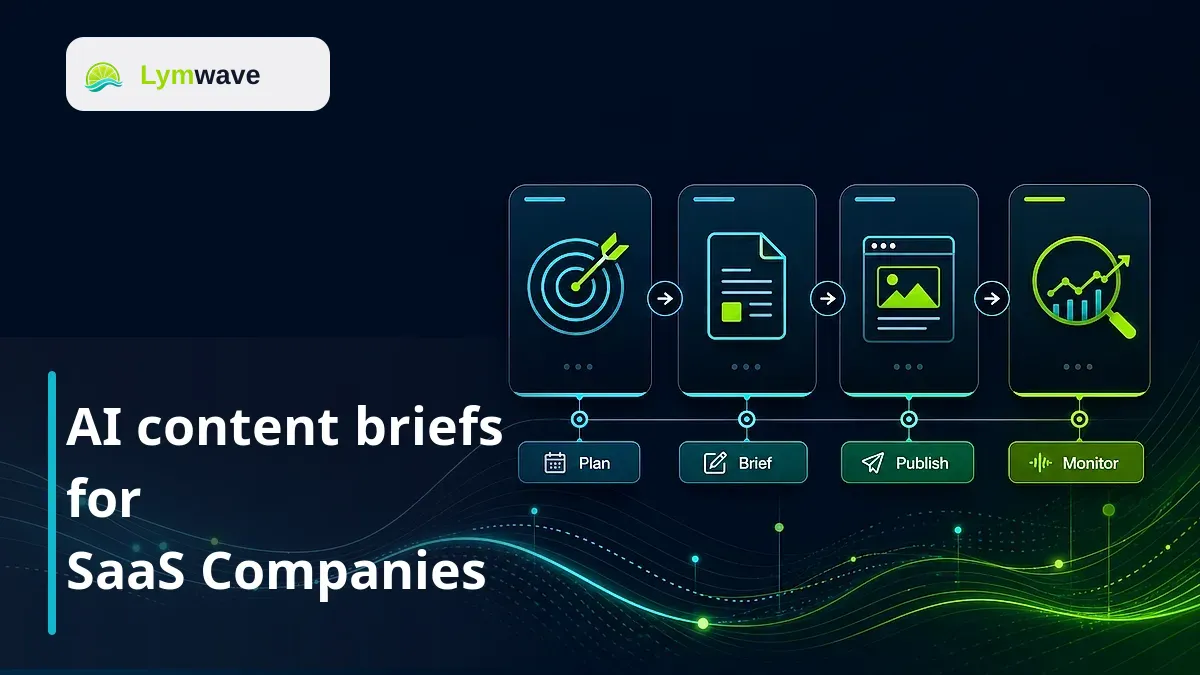
This guide sits in the AI SEO Automation topic cluster as a supporting resource.
Why AI content briefs for SaaS Companies matters
SaaS content teams rarely struggle because they have no ideas. They struggle because too many ideas enter the calendar without enough context. A topic sounds useful, a keyword looks relevant, and the team asks AI to draft. The result may be readable, but it often misses the buyer's real question, repeats existing content, or fails to support the product narrative.
Quick answer: AI content briefs for SaaS Companies turn a topic into a reviewable article plan before drafting starts. A strong brief defines audience, search intent, answer target, entities, internal links, product context, metadata, and quality checks so AI SEO automation produces content that is easier to edit, publish, and improve.
This matters most when a SaaS company is trying to publish consistently without hiring a large editorial team. AI can accelerate research, outlines, first drafts, and refreshes, but only if it receives clear instructions. The brief is the control layer. It tells the AI content workflow what job the article has, which claims are safe, which pages it should support, and how the editor will judge success.
For consideration-stage buyers, the brief is also where content becomes commercially useful without becoming pushy. A SaaS article should answer the searcher's question first, then connect the answer to relevant workflows, pain points, and next steps. Without a brief, product context gets bolted on at the end. With a brief, the article can naturally explain why the workflow matters and where a platform like Lymwave fits.
What AI content briefs for SaaS Companies means
An AI content brief is a structured plan for one article. For SaaS companies, that plan should connect search demand, buyer context, product positioning, and SEO/AEO/GEO requirements into a single source of truth for drafting and review.
The brief should not be a long prompt with every possible instruction. It should be practical enough for an editor, writer, or content agent to understand quickly. It should explain what the article must answer, what it should not drift into, and how it supports the wider content system.
| Brief element | What it should define | Why it matters for SaaS |
|---|---|---|
| Reader and role | Founder, marketer, operator, agency, or technical buyer | Keeps the article matched to the buyer's knowledge level |
| Search intent | Definition, workflow, comparison, checklist, problem, or buying angle | Prevents a generic draft that answers the wrong question |
| Direct answer | The short answer the article should make clear early | Supports AEO and fast reader comprehension |
| Entities | Product category, workflow, integrations, metrics, channels, and concepts | Helps readers and AI systems understand the topic clearly |
| Internal links | Existing pillar, cluster, and next-step pages | Builds topical authority and avoids orphan content |
| Product context | Where the SaaS product is relevant, and where it is not | Keeps commercial copy useful rather than forced |
| Review rules | Claims to verify, promises to avoid, and quality checks | Reduces editing time and protects trust |
For example, a brief about content briefs should not turn into a generic guide to all content marketing. It should stay focused on planning articles before drafting. It can mention SEO content automation, AI SEO automation, internal linking, publishing, and reporting, but only where those ideas support the central question.
The best briefs make the article's job obvious. One post might support a pillar guide, another might answer a sales objection, and another might fill a content gap from Search Console. When that role is visible, the draft has a better chance of adding something useful to the site instead of becoming another broad overview.
How to approach AI content briefs for SaaS Companies
Start with the reason the article exists. The topic should come from a content plan, keyword cluster, customer question, onboarding research, site audit, competitive gap, or Google Search Console signal. A brief created from a random keyword is still random, even if AI writes it neatly.
Next, gather the minimum useful context. For most SaaS articles, give the AI:
- The working title and primary keyword.
- The target audience and funnel stage.
- The search intent and article type.
- Existing pages that should be linked.
- Product workflows, integrations, or limits that matter.
- Claims, statistics, competitor comparisons, or promises to avoid.
- The desired outcome for the reader.
Then ask AI to produce a brief, not the article. This keeps planning separate from drafting. Review the brief for focus, accuracy, overlap, and usefulness before generating the full piece.
A simple workflow looks like this:
- Choose the topic from an approved content plan.
- Classify the intent and decide the article role.
- Generate the brief with H1, sections, answer target, entities, links, metadata, and review notes.
- Compare the plan against existing posts to avoid duplication.
- Add product context the model cannot know on its own.
- Approve the brief before drafting.
- Use the brief as the quality checklist after drafting.
This workflow is especially useful for SaaS teams that publish across clusters. A cluster might include a pillar guide, use-case pages, comparison pages, integration pages, and educational blog posts. A brief helps each article stay in its lane while linking to the right next step. For a broader system view, use the AI SEO automation guide as the cluster's strategic reference point.
The brief should also include a short priority note. Something as simple as "supports the AI SEO automation cluster" or "answers a recurring buyer question before demo signup" gives editors context when the article reaches review. It also helps the team decide whether to refresh, merge, or retire the article later.
After publication, keep the brief attached to the article record. When impressions, clicks, CTR, internal-link data, or AI visibility checks suggest a refresh, compare the live page against the original brief. Sometimes the fix is a clearer answer. Sometimes it is a stronger comparison, a tighter FAQ, or a better link to the next workflow.
How this supports SEO, AEO, and GEO
AI content briefs support SEO by defining intent, structure, metadata, and internal links before the draft exists. Instead of hoping the article becomes relevant during editing, the team decides relevance upfront. The result is a page with one clear role in the cluster.
They support AEO by forcing the main answer into the plan. If the brief names the answer target and the questions the article must cover, the draft is more likely to include useful summaries, definitions, comparisons, and FAQs. That makes the content easier for readers and answer engines to parse.
They support GEO by planning entity coverage. A SaaS article should clearly name the product category, audience, workflow, integrations, adjacent concepts, and brand context where relevant. Generative systems need that clarity to understand what the page is about, but readers benefit from it too.
Use this review map before approving a brief:
| Goal | Brief requirement | Good sign |
|---|---|---|
| SEO | Intent, metadata, headings, internal links | The article has a clear place in the cluster |
| AEO | Direct answer, FAQ questions, concise definitions | The main answer appears early and plainly |
| GEO | Entities, category language, workflow context | The topic is easy to summarize without guessing |
| Quality | Claims to verify and claims to avoid | The editor knows what needs human review |
| Operations | Drafting, image, publishing, and refresh notes | The team can move the article through production |
This is where automated SEO content becomes safer and more useful. The automation does not replace judgment. It moves repeatable judgment into the plan so every draft starts from better constraints.
Lymwave is built for that kind of connected workflow: content plans, AI-generated drafts, SEO/AEO/GEO review, featured images, publishing integrations, translations where configured, Buffer social distribution, weekly reports, and visibility monitoring can all connect back to the article's original intent. The brief is the small document that keeps those steps aligned.
For tactical planning, pair briefs with a calendar. A 30-day SEO content plan gives the publishing sequence. The brief gives each article enough context to execute that sequence well.
Common mistakes to avoid
The first mistake is treating the brief as a keyword list. Keywords matter, but they do not explain the reader's problem, the article angle, the product relevance, or the quality bar. A list of terms is input, not a plan.
The second mistake is letting AI invent SaaS context. If the article needs product details, workflow limits, integration behavior, pricing logic, screenshots, benchmarks, or customer proof, provide verified inputs. Do not ask the model to fill those gaps with confident guesses.
The third mistake is approving broad briefs. SaaS topics can sprawl quickly. A brief for content briefs should not become a full guide to keyword research, publishing automation, reporting, and sales enablement. Keep the scope narrow enough for the reader to leave with a useful answer.
The fourth mistake is ignoring overlap. AI may create similar briefs for nearby topics, especially in dense clusters. Before drafting, check whether the topic should be a new article, a refresh, a section inside an existing post, or an internal link from another page.
The fifth mistake is skipping post-draft comparison. The brief should not disappear once the draft is written. Use it during review to confirm the article answered the main question, included the required entities, linked to the right pages, avoided unsupported claims, and stayed aligned with search intent.
Finally, avoid optimizing only for search engines. The brief should help the article become more useful for the buyer. If the final draft feels like it was written for a crawler instead of a person evaluating a SaaS workflow, the brief needs sharper audience context and clearer editorial rules.
Frequently asked questions
What should you know about AI content briefs for SaaS Companies?
AI content briefs for SaaS Companies are planning documents for reviewable, useful article generation. They define intent, audience, answer targets, entities, internal links, product context, metadata, and quality checks before AI drafts the article.
How do AI content briefs support SEO, AEO, and GEO?
They support SEO by planning structure, metadata, and internal links. They support AEO by making direct answers and FAQs explicit. They support GEO by naming the product category, workflows, entities, and audience context in clear language.
What mistakes should you avoid with AI content briefs for SaaS Companies?
Avoid keyword-only briefs, invented product context, bloated scopes, duplicated article plans, unsupported claims, and skipping the post-draft review against the approved brief.
Should a SaaS team generate a brief before every AI-written article?
Yes, for any article meant to support organic growth. Short updates and internal notes may not need a full brief, but public SEO, AEO, and GEO content should have a reviewed plan before drafting.
Where does Lymwave fit into the brief workflow?
Lymwave helps connect planning, article generation, SEO/AEO/GEO review, featured images, publishing workflows, reports, and visibility monitoring. The brief gives each automated step a clear article purpose and review standard.
How should teams review a brief before drafting?
Check whether the brief answers the correct search intent, names the reader, includes useful entities, avoids duplicated angles, links to existing pages, and gives editors clear claims and quality checks. Use the practical advice in how to optimize blog posts for SEO, AEO, and GEO as a final review lens.
Useful next reads
AI SEO Automation Guide: How to Build a Content Engine That Publishes Consistently explains practical SEO, AEO, and GEO workflows for planning, publishing, measuring, and improving useful content consistently.
How to Create a 30-Day SEO Content Plan with AI explains practical SEO, AEO, and GEO workflows for planning, publishing, measuring, and improving useful content consistently.
How to Optimize Blog Posts for SEO, AEO, and GEO explains practical SEO, AEO, and GEO workflows for planning, publishing, measuring, and improving useful content consistently.
Turn this into a working content system
Audit your content, find AI visibility gaps, and build a publishing workflow that compounds.