

AI content briefs for Agencies
AI content briefs for Agencies explains practical SEO, AEO, and GEO workflows for planning, publishing, measuring, and improving useful content consistently.
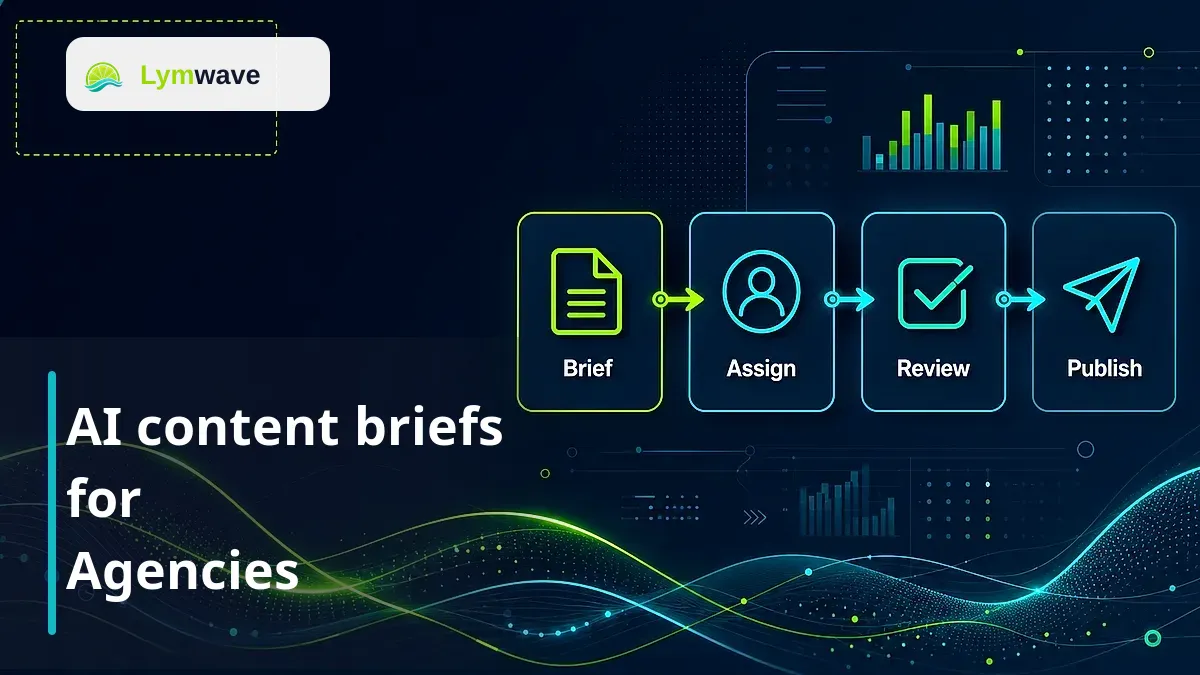
This guide sits in the AI SEO Automation topic cluster as a supporting resource.
Why AI content briefs for Agencies matters
Agencies do not need AI to produce more loose drafts. They need a repeatable way to turn client strategy, search intent, editorial standards, and approval rules into content that can move through production without every article becoming a rescue project.
Quick answer: AI content briefs for Agencies turn client goals into a structured article plan before drafting starts. A strong brief defines the audience, search intent, direct answer, entity coverage, internal links, client positioning, review rules, and approval expectations so AI SEO automation can support faster delivery without weakening quality control.
This matters because agency content work has more moving parts than a single in-house blog. There may be strategists, account managers, subject matter reviewers, freelance writers, editors, SEO leads, and client approvers. Without a brief, each person brings a different mental model to the article. The result is scope drift, late edits, unsupported claims, and drafts that sound plausible but miss the client strategy.
The brief is the shared operating document. It tells the AI content workflow what the page is supposed to achieve, what the client can credibly say, which pages the article should support, and what reviewers should check before publication. That makes automated SEO content useful as an agency process, not just as a writing shortcut.
For consideration-stage buyers, this is the difference between "we use AI" and "we have a governed content system." Agencies that can show a controlled briefing process are better positioned to explain how they protect quality while improving publishing consistency.
What AI content briefs for Agencies means
An AI content brief is a structured plan for one article. For agencies, the brief also acts as a handoff document between strategy, production, client review, and performance measurement. It should be detailed enough to prevent drift, but clear enough that writers and reviewers can use it quickly.
The brief should not become a giant prompt full of generic instructions. It should answer practical questions: who is the article for, what intent does it serve, what does the client want to be known for, which internal links matter, what claims require approval, and how will the article be judged after publishing?
| Brief element | What it should define | Why it matters for agencies |
|---|---|---|
| Client goal | Pipeline, authority, education, retention, or sales support | Keeps the article tied to the account strategy |
| Reader and stage | Role, awareness, pain point, and buying context | Prevents one-size-fits-all copy |
| Search intent | Definition, workflow, comparison, checklist, or commercial query | Makes the draft match the SERP and reader need |
| Direct answer | The short answer the article should make clear early | Supports AEO and faster review |
| Entities | Client categories, services, products, locations, tools, and concepts | Strengthens topical clarity for SEO and GEO |
| Internal links | Existing pillar, service, comparison, and related pages | Connects the article to the client's site architecture |
| Approval rules | Claims, examples, proof, compliance notes, and wording limits | Reduces late client edits and risk |
For example, a brief about content briefs for an agency should not drift into a generic article about all content marketing operations. It should stay focused on how agencies plan AI-assisted content before drafting. It can mention SEO content automation, AI SEO automation, and publishing workflows, but only where those ideas support client delivery and quality governance.
A useful agency brief also names the article's role in the retainer. One article may support a pillar page. Another may answer a sales objection. Another may fill a content gap from Search Console. Another may refresh an older client page that has impressions but weak CTR. The article role tells the production team what success should look like.
How to approach AI content briefs for Agencies
Start with the account strategy. Before a prompt is written, confirm why the article belongs in the client plan. The source might be a content calendar, site audit, Search Console opportunity, keyword cluster, sales-call theme, product launch, or a gap against competitors. If the idea is not connected to a client goal, the brief will not save it.
Next, gather the minimum context needed for a useful draft. For most agency articles, the brief should include:
- The working title and primary keyword.
- The client, audience, funnel stage, and search intent.
- The main answer the article should provide.
- Existing pages that should be linked.
- Approved product, service, industry, or local context.
- Claims, statistics, customer examples, and guarantees the AI must not invent.
- Client voice notes and compliance constraints.
- The approval owner and review criteria.
Then generate the brief before generating the article. This sequencing gives the strategist or editor a chance to correct the angle before the draft exists. It is much cheaper to fix a brief than to rewrite 1,800 words that answered the wrong question.
A practical agency workflow looks like this:
- Select the topic from an approved client content plan.
- Classify the intent, funnel stage, and article role.
- Generate a brief with H1, section plan, answer target, entities, internal links, metadata, and review notes.
- Compare the brief against existing client pages to avoid overlap.
- Add client-specific context and remove unsupported claims.
- Approve the brief internally before drafting.
- Use the same brief as the QA checklist before client delivery.
This also gives account teams a cleaner way to communicate with clients. Instead of asking a client to review a full draft cold, the agency can show the plan first: target reader, angle, questions answered, pages linked, and claims that need approval. That makes feedback earlier and less chaotic.
For monthly planning, pair briefs with a publishing sequence. A 30-day SEO content plan can define what gets produced and when. The brief defines what each article must do for the client.
How this supports SEO, AEO, and GEO
AI content briefs support SEO by defining relevance before production begins. The brief clarifies intent, metadata, headings, entities, internal links, and page role. For agencies managing multiple clients, that structure helps each article fit the client's topical map instead of becoming a standalone draft.
They support AEO by forcing clear answers into the article plan. If the brief names the answer target, reader questions, definitions, examples, and FAQ needs, the draft is more likely to include passages that humans and answer engines can understand quickly.
They support GEO by making entity and category language explicit. Agencies need client content to clearly identify the brand, product category, services, audience, workflow, and location or industry context where relevant. Generative systems need that clarity, and so do client-side reviewers.
Use this brief review map before moving to drafting:
| Goal | Brief requirement | Good sign |
|---|---|---|
| SEO | Intent, metadata, headings, entities, and internal links | The article has a clear place in the client cluster |
| AEO | Direct answer, FAQs, definitions, and concise summaries | The main answer appears early and plainly |
| GEO | Brand, category, service, workflow, and audience context | The page can be summarized accurately |
| Quality | Claims to verify and claims to avoid | Reviewers know what needs human approval |
| Operations | Owner, due date, image, publishing, and refresh notes | The article can move through production predictably |
This is where automation becomes more defensible. AI does not remove strategy or editing. It moves repeatable editorial judgment into the plan so every draft starts with stronger constraints.
Lymwave is built for this kind of connected workflow: content plans, article generation, SEO/AEO/GEO review, featured images, publishing integrations, reports, and visibility monitoring can all stay tied to the article's original purpose. For agencies, the brief is the small artifact that keeps the client strategy visible across those steps.
Common mistakes to avoid
The first mistake is treating the brief as a keyword export. Keywords are useful inputs, but they do not define the client's positioning, buyer stage, internal-link strategy, proof limits, or approval path. A keyword list is not an agency-ready plan.
The second mistake is letting AI invent client facts. If the article needs service details, product claims, case studies, pricing, compliance language, customer examples, or technical capabilities, use verified inputs. Confident guesses can create trust and approval problems.
The third mistake is skipping overlap checks. Agency content calendars often contain similar topics across clusters or months. Before drafting, decide whether the idea should become a new article, a refresh, a section in an existing page, or an internal link from another asset.
The fourth mistake is hiding the brief from reviewers. If only the writer sees the brief, editors and clients may judge the draft against different expectations. Keep the brief attached to the article record so review stays anchored to the approved plan.
The fifth mistake is optimizing only for search output. Agency content still needs to be credible, useful, and aligned with the client's business model. If the article sounds like generic SEO text with a brand name inserted later, the brief needs sharper positioning and examples.
Finally, avoid building a process that depends on one senior editor fixing everything at the end. The brief should make quality more distributed. Strategists, writers, editors, and account managers should all be able to see what the article is supposed to do.
For final editorial checks, use a focused SEO/AEO/GEO process like how to optimize blog posts for SEO, AEO, and GEO.
Frequently asked questions
What should you know about AI content briefs for Agencies?
AI content briefs for Agencies are structured article plans that help teams turn client strategy into reviewable drafts. They define audience, search intent, direct answers, entities, internal links, client context, metadata, and approval rules before AI generates the article.
How do AI content briefs support SEO, AEO, and GEO?
They support SEO by planning structure, metadata, entities, and internal links. They support AEO by making direct answers, definitions, and FAQs explicit. They support GEO by naming the client brand, category, services, workflows, audience, and context clearly.
What mistakes should you avoid with AI content briefs for Agencies?
Avoid keyword-only briefs, invented client facts, duplicated article plans, hidden review expectations, unsupported claims, and using the brief only during drafting instead of through final QA.
Should agencies create a brief before every AI-assisted article?
Yes, for client-facing SEO, AEO, or GEO content. A lightweight brief is enough for smaller updates, but any article that affects client visibility or positioning should have an approved plan before drafting.
How can agencies use briefs to improve client review?
Share the plan before the full draft when useful. The brief lets clients approve the audience, angle, claims, and internal-link direction early, which reduces late-stage rewrites and makes feedback more specific.
Where does Lymwave fit into the agency workflow?
Lymwave helps connect planning, article generation, SEO/AEO/GEO review, featured images, publishing, reports, and visibility monitoring. The brief keeps each automated step tied to the client strategy and review standard.
Useful next reads
AI SEO Automation Guide: How to Build a Content Engine That Publishes Consistently explains practical SEO, AEO, and GEO workflows for planning, publishing, measuring, and improving useful content consistently.
How to Create a 30-Day SEO Content Plan with AI explains practical SEO, AEO, and GEO workflows for planning, publishing, measuring, and improving useful content consistently.
How to Optimize Blog Posts for SEO, AEO, and GEO explains practical SEO, AEO, and GEO workflows for planning, publishing, measuring, and improving useful content consistently.
Turn this into a working content system
Audit your content, find AI visibility gaps, and build a publishing workflow that compounds.